YOUR BODY · SLIDE BY SLIDE

Your broken bone rebuilds itself, usually without a scar

This is how your body repairs a fracture, in four steps.

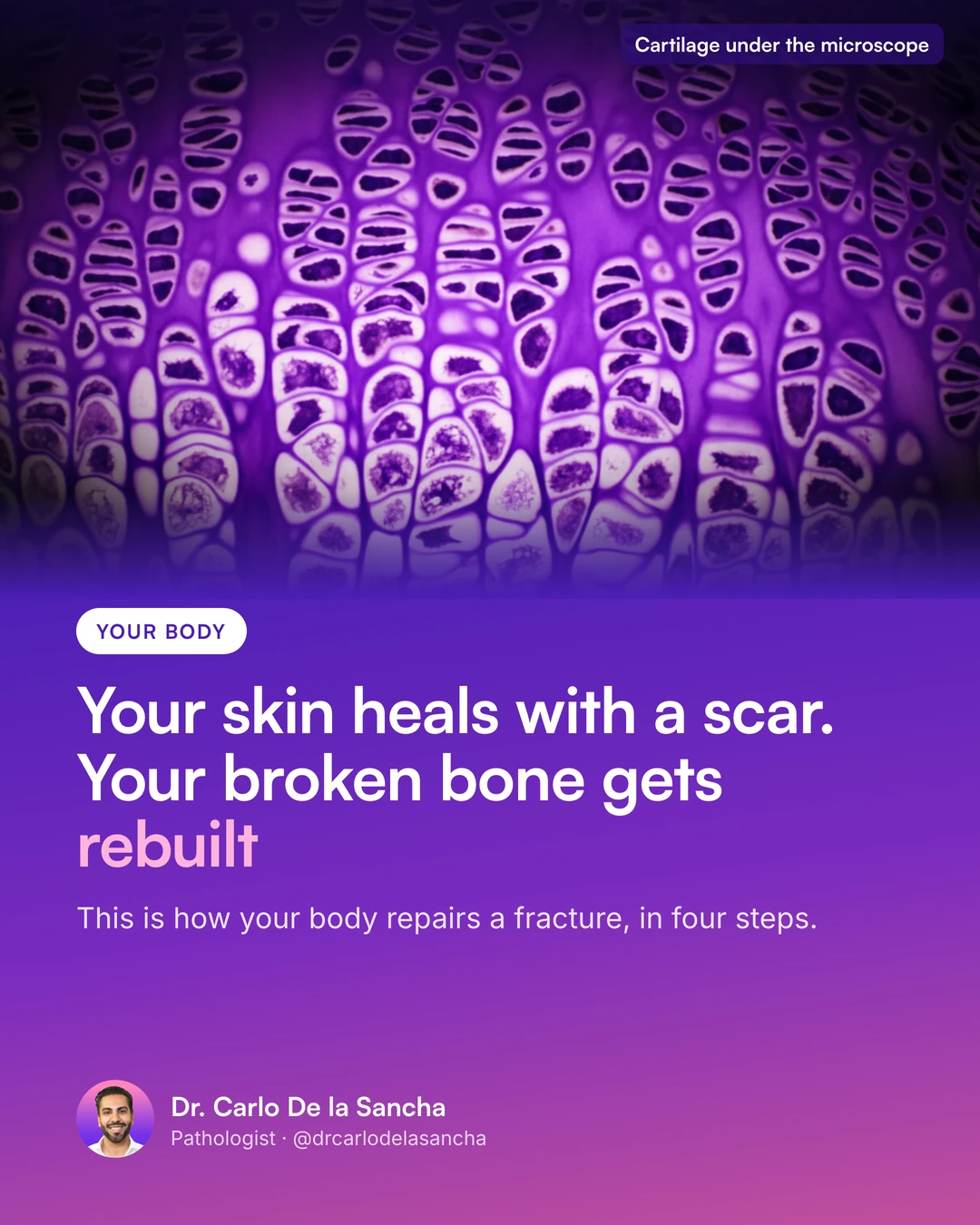
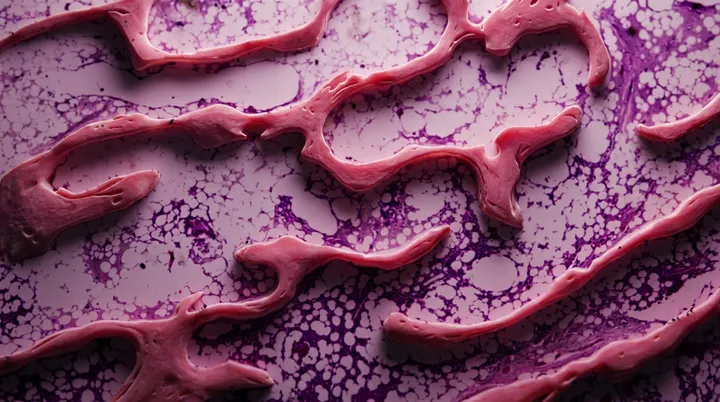
  • Cartilage under the microscope Your body Your skin heals with a scar. Your broken bone gets rebuilt This is how your body repairs a fracture, in four steps. Dr. Carlo De la Sancha Pathologist · @drcarlodelasancha
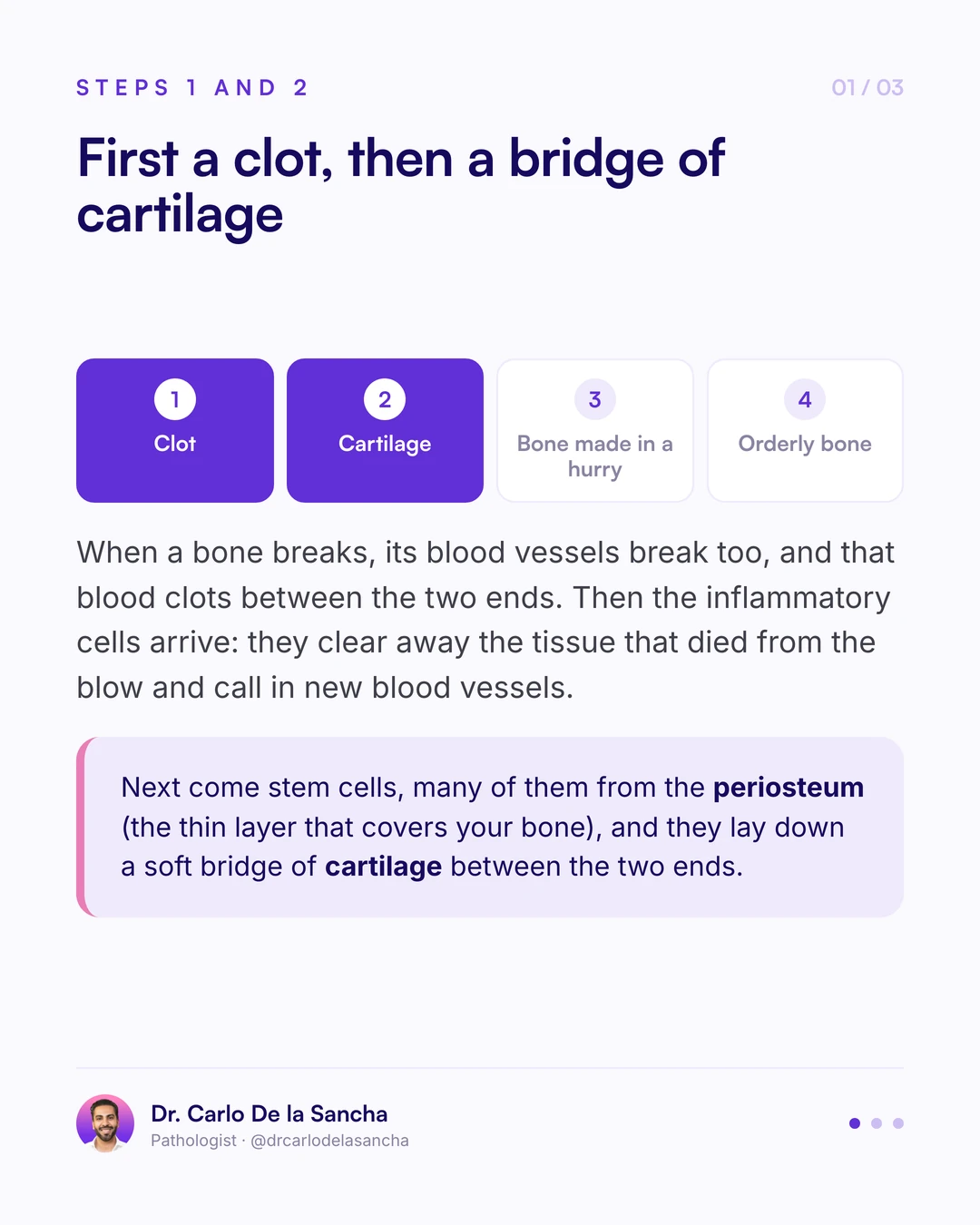
  • Steps 1 and 2 01 / 03 First a clot, then a bridge of cartilage Clot Cartilage Bone made in a hurry Orderly bone When a bone breaks, its blood vessels break too, and that blood clots between the two ends. Then the inflammatory cells arrive: they clear away the tissue that died from the blow and call in new blood vessels. Next come stem cells, many of them from the periosteum (the thin layer that covers your bone), and they lay down a soft bridge of cartilage between the two ends. Dr. Carlo De la Sancha Pathologist · @drcarlodelasancha
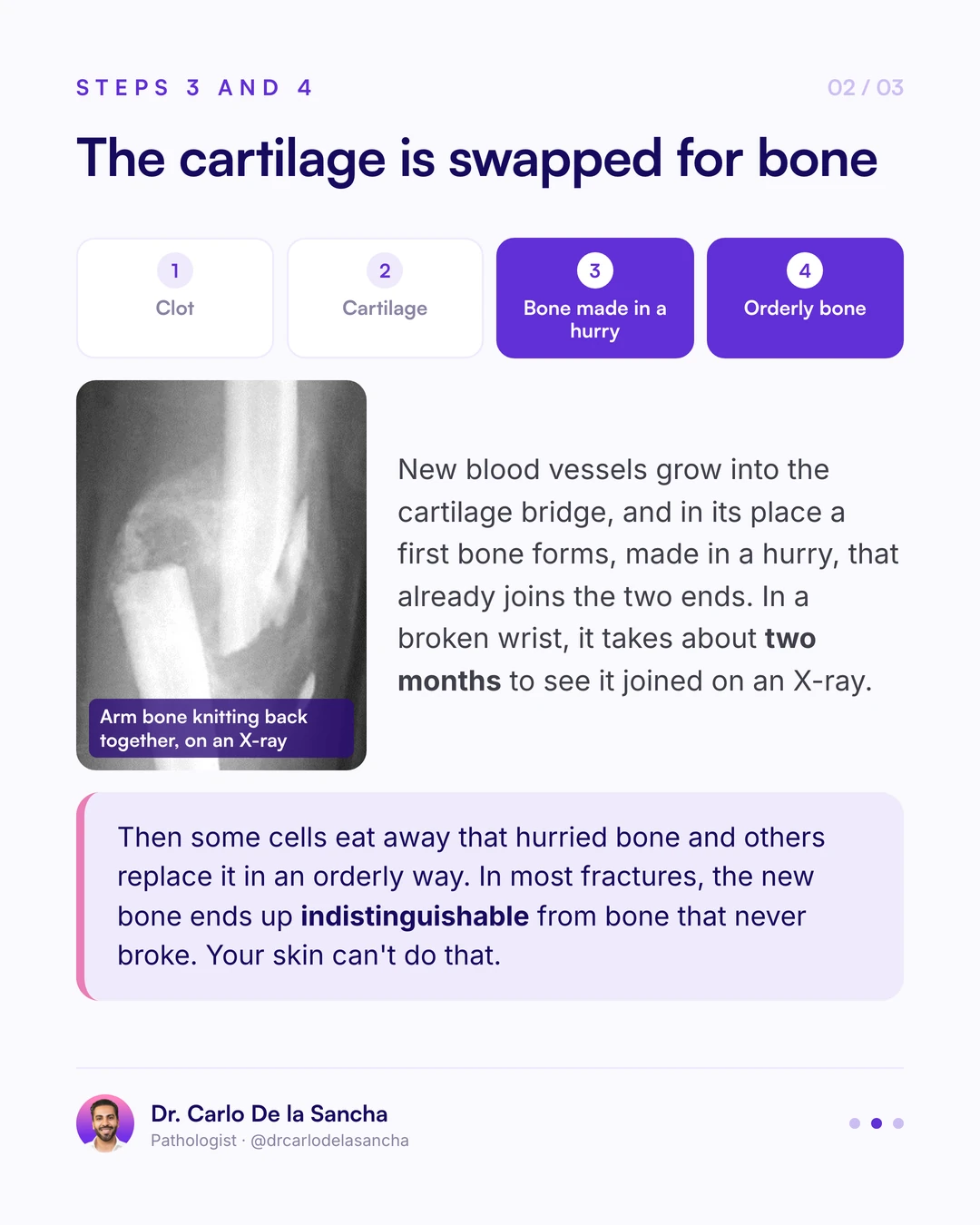
  • Steps 3 and 4 02 / 03 The cartilage is swapped for bone Clot Cartilage Bone made in a hurry Orderly bone Arm bone knitting back together, on an X-ray New blood vessels grow into the cartilage bridge, and in its place a first bone forms, made in a hurry, that already joins the two ends. In a broken wrist, it takes about two months to see it joined on an X-ray. Then some cells eat away that hurried bone and others replace it in an orderly way. In most fractures, the new bone ends up indistinguishable from bone that never broke. Your skin can't do that. Dr. Carlo De la Sancha Pathologist · @drcarlodelasancha
  • What helps you 03 / 03 Your bone needs time and oxygen Keep the cast on for as long as you're told: it protects the bridge while it's being built. Cigarette smoke carries carbon monoxide, which takes oxygen's place in your red blood cells, and nicotine narrows your blood vessels. That's why, in people who smoke, a fracture takes longer to heal and it's more common for the ends to never join (nonunion). If you smoke, quit: within two days of quitting, the carbon monoxide in your blood is already down. Sources: Dimitriou R et al., BMC Med 2011 (PMID 21627784). Einhorn TA, Gerstenfeld LC, Nat Rev Rheumatol 2015 (PMID 25266456). Hernigou J, Schuind F, Bone Joint Res 2019 (doi:10.1302/2046-3758.86.BJR-2018-0344.R1). Images: cartilage, Khan NM et al., CC BY 4.0; X-ray, Bill Rhodes, CC BY 2.0. Dr. Carlo De la Sancha Pathologist · @drcarlodelasancha
  • Want to understand your body? Subscribe to my newsletter: drcarlodelasancha.com/en/newsletter Save it, share it and follow me → @drcarlodelasancha Educational content. Not a substitute for a visit to your doctor.

Know someone who would find this helpful?

Share it with them.