
You asked
How often do I need a colonoscopy?
This question came from the comments on this video:
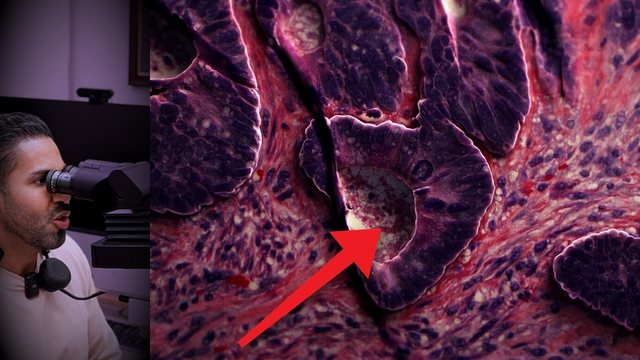 They found several tumors in his liver .. but the cancer started somewhere else
Hearing Spanish on YouTube? Tap ⚙ › Audio track › English
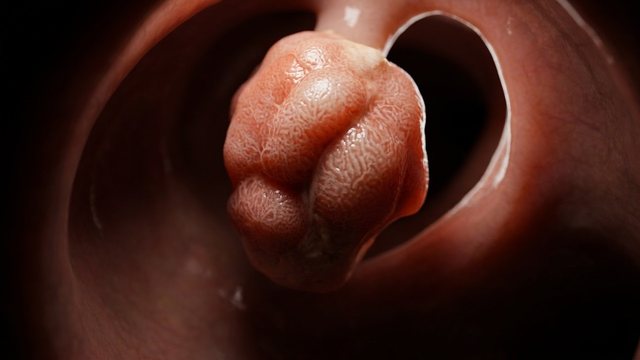
Every 10 years if it came back normal and you are at average risk. Screening starts at 45 and continues through 75. What they find changes the interval: an adenoma 10 mm or larger means a repeat in 3 years, while one or two small tubular adenomas mean a repeat in 7 to 10 years.
If they already took out my polyps, can new ones appear, and is that why I need colonoscopies more often?
Yes, new ones can appear, so surveillance continues. The polyp’s features guide the timing: villous or tubulovillous histology (its shape under the microscope), high-grade dysplasia, or a size of 10 mm or larger calls for a repeat in 3 years; one or two small tubular polyps call for a repeat in 7 to 10 years. That assumes the polyp contained no cancer, the exam and removal were complete, and you have no family history of colon cancer.
Colon cancer runs in my family. At what age should I start, and how often should I get screened?
When colon cancer runs in the family, many people start screening before 45 with a colonoscopy rather than a stool test. The gap between exams can be shorter, too. For others, the average-risk schedule starting at 45 still applies. Bring two details to your visit: which family members had colon cancer and their ages at diagnosis.
Is the stool blood test as good as a colonoscopy?
No, though both count as screening. A stool blood test is repeated every year, while a stool test that looks for DNA markers is repeated every 1 to 3 years. A positive result means a colonoscopy next, an exam that also removes polyps in the same session. The best test is the one you will actually do.
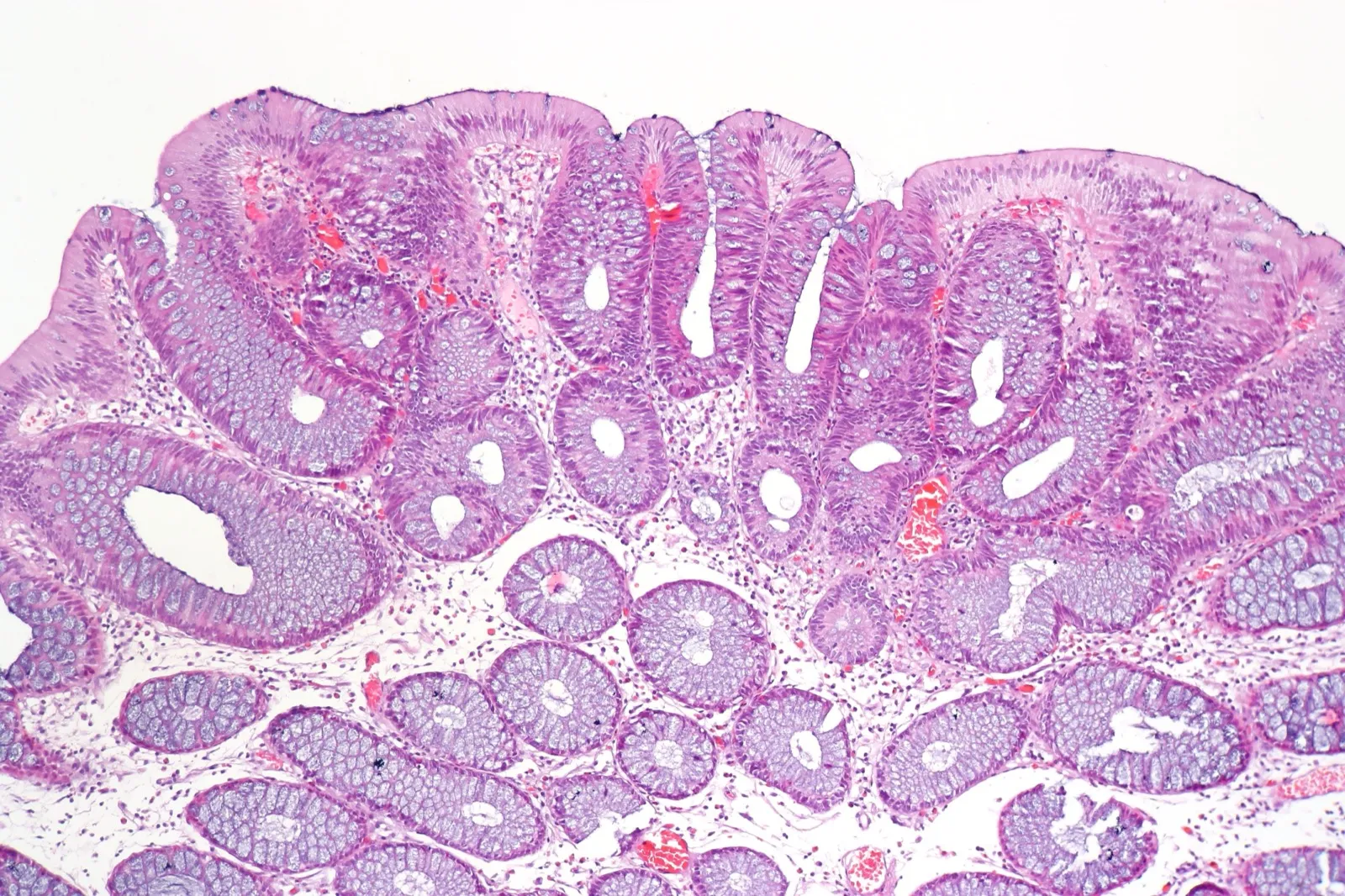
Micrograph: CoRus13, Tubular adenoma - colon, intermed. mag., CC BY-SA 4.0. Resized for the web.


Where this comes from
- USPSTF: colorectal cancer screening from ages 45 to 75; when colonoscopy is used, every 10 years after a negative examination.
- US Multi-Society Task Force (ACG, AGA and ASGE, 2020): repeat colonoscopy in 10 years after a normal examination; in 7 to 10 years after 1 or 2 tubular adenomas smaller than 10 mm; in 3 to 5 years after 3 or 4; and in 3 years after an adenoma measuring 10 mm or more, with villous histology or with high-grade dysplasia. All intervals assume an examination complete to the cecum and adequate bowel preparation.
- National Polyp Study, 15.8-year follow-up: removing adenomas by colonoscopy was associated with 53% fewer deaths from colorectal cancer (12 observed versus 25.4 expected).
- National Comprehensive Cancer Network (NCCN), Guidelines for Patients: Colorectal Cancer Screening v1.2024: accessed 2026-09-19
- American College of Gastroenterology (ACG), Clinical Guidelines: Colorectal Cancer Screening 2021: accessed 2026-09-19
- American Cancer Society (ACS), colorectal cancer screening guideline (2026 update): accessed 2026-09-19
- European Society of Gastrointestinal Endoscopy (ESGE): accessed 2026-09-19
- U.S. Multi-Society Task Force on Colorectal Cancer (ACG/AGA/ASGE) .. Am J Gastroenterol 2017: accessed 2026-09-19
- National Cancer Institute (NCI), PDQ Colorectal Cancer Screening: accessed 2026-09-19
- US Multi-Society Task Force on Colorectal Cancer (ACG/AGA/ASGE): accessed 2026-09-19
- National Cancer Institute (NCI), PDQ: accessed 2026-09-19
This is educational content, meant to help you understand your body. It is not a medical consultation or a diagnosis, and it does not tell any particular person what to do. If something worries you, see a doctor you trust.