
You asked
So it's HIV and a cancer on top of that?
This question came from the comments on this video:
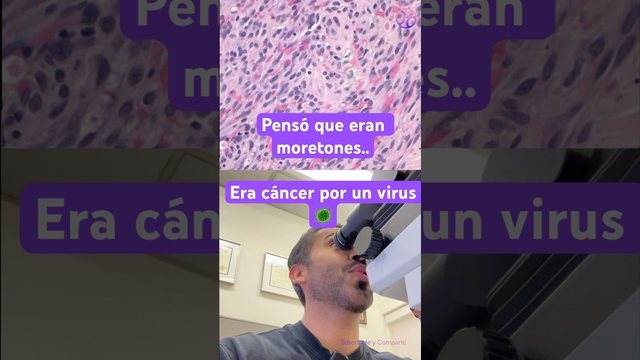 He thought they were bruises .. it was cancer caused by a virus
Hearing Spanish on YouTube? Tap ⚙ › Audio track › English
Yes, it's HIV plus a cancer, Kaposi sarcoma, but the two are connected. The cancer is caused by human herpesvirus 8, from the same family as the virus behind cold sores. HIV weakens the immune system, and that leaves the door open for this virus to cause the tumor.
Does HHV-8 cause the cancer, or does HIV? Can HHV-8 cause it on its own?
HHV-8 causes it by making the cells that line blood vessels multiply too much. On its own it rarely does, since most people who carry it never get Kaposi sarcoma. HIV supplies the missing piece by weakening the immune system, just as transplant drugs or older age can.
Does everyone with HIV get Kaposi sarcoma, and are all their skin lesions from it?
No. Having HIV doesn't mean having Kaposi sarcoma, and not every skin lesion in someone with HIV comes from it. Risk rises when immunity is very low, and HIV treatment lowers it but doesn't erase it. Other causes include molluscum contagiosum, herpes simplex and fungi. A doctor's exam is what tells them apart.
Can Kaposi sarcoma be cured? Can it go away with HIV treatment alone?
It can be controlled, and lesions limited to the skin often shrink with effective antiretroviral therapy. When the tumor is extensive or has reached internal organs, chemotherapy may be needed too. How well it responds depends on viral load, immune status and how far it has spread.
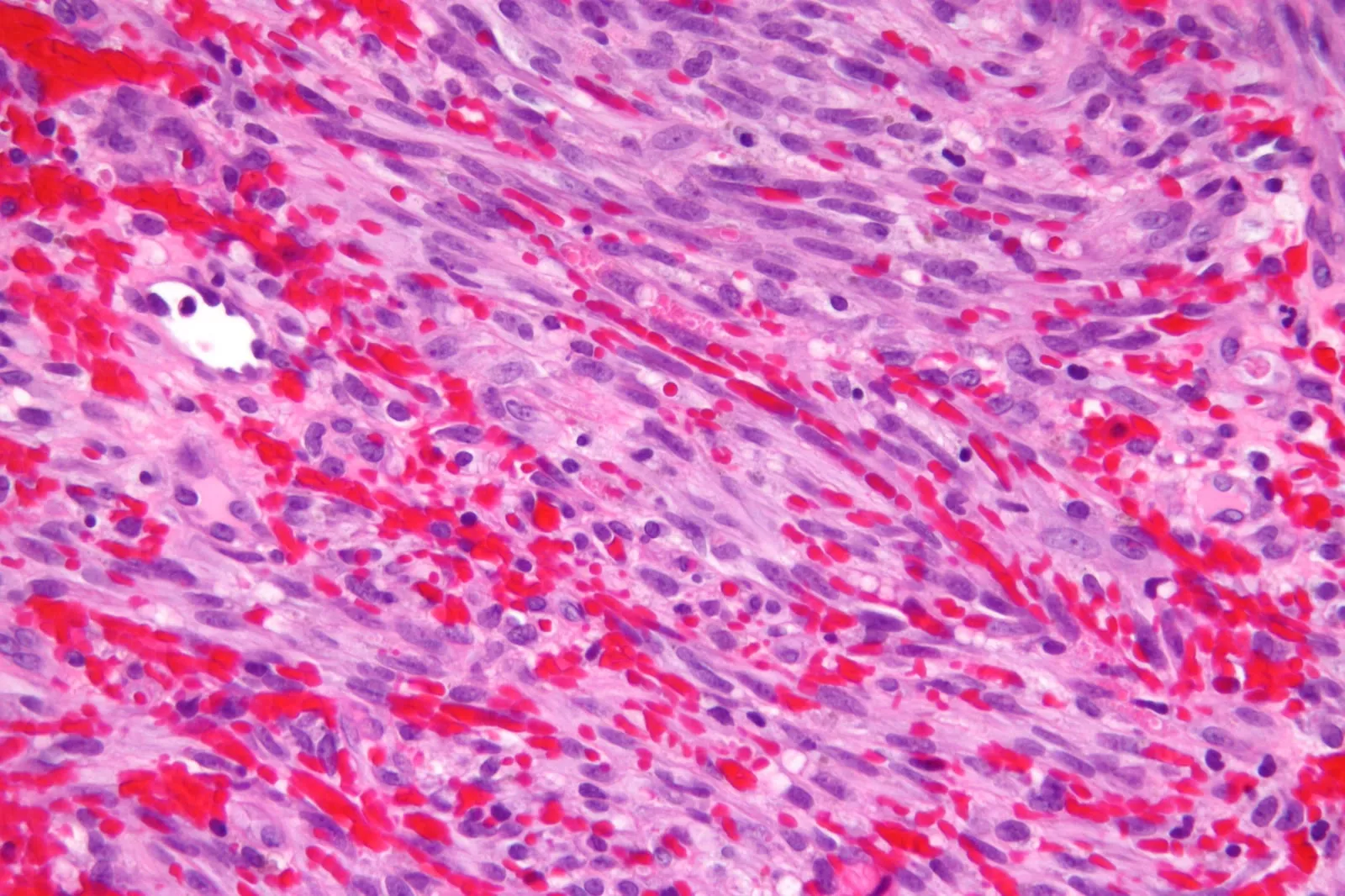
Micrograph: Nephron, Kaposi sarcoma high mag, CC BY-SA 3.0. Resized.

Where this comes from
This is educational content, meant to help you understand your body. It is not a medical consultation or a diagnosis, and it does not tell any particular person what to do. If something worries you, see a doctor you trust.