
You asked
Why is the Pap test now every 5 years if it's so important?
This question came from the comments on this video:
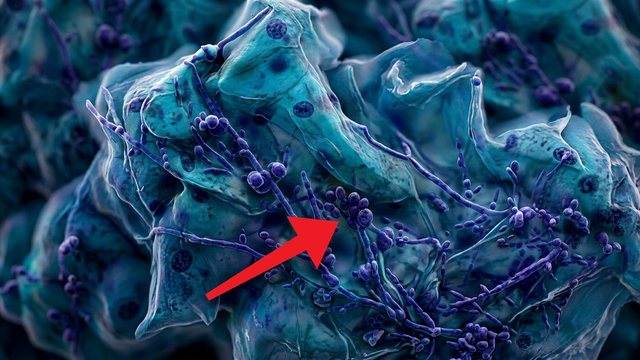 Herpes, trichomonas, yeast, vaginosis .. your Pap test detects more than cancer
Also came up on 1 more video

Cervical cancer grows very slowly, and the HPV test picks up the risk well in advance. That's why, from 30 to 65, a normal HPV test, alone or with a Pap, is good for 5 years. With a Pap alone, or from 21 to 29, it's every 3 years. HIV, a weakened immune system or a recent abnormal result calls for screening more often.
Why does my doctor say an STD test matters more than a Pap test?
The Pap test and an STI test look for different things, so ideally you keep both up to date. The Pap test checks for the changes HPV leaves in the cells of the cervix. At your visit, ask which infections your STI test covers and when your next Pap or HPV test is due.
If my last Pap test was normal, can I really wait four years for the next one?
Yes, if it included an HPV test and you're 30 to 65, since then the interval is 5 years. With a Pap test alone, the next one is due in 3 years. No test is perfect, and a result can be normal even when a lesion is there. So abnormal bleeding, pain or new discharge gets checked right away, not at your next screening.
How often should I get a Pap test, and what does it depend on?
From 21 to 29, a Pap test every 3 years. From 30 to 65, a Pap every 3 years or an HPV test every 5, alone or with a Pap. The American Cancer Society suggests starting at 25 with HPV testing every 5 years. With HIV, a weakened immune system, or a recent abnormal result, screening may be more frequent.
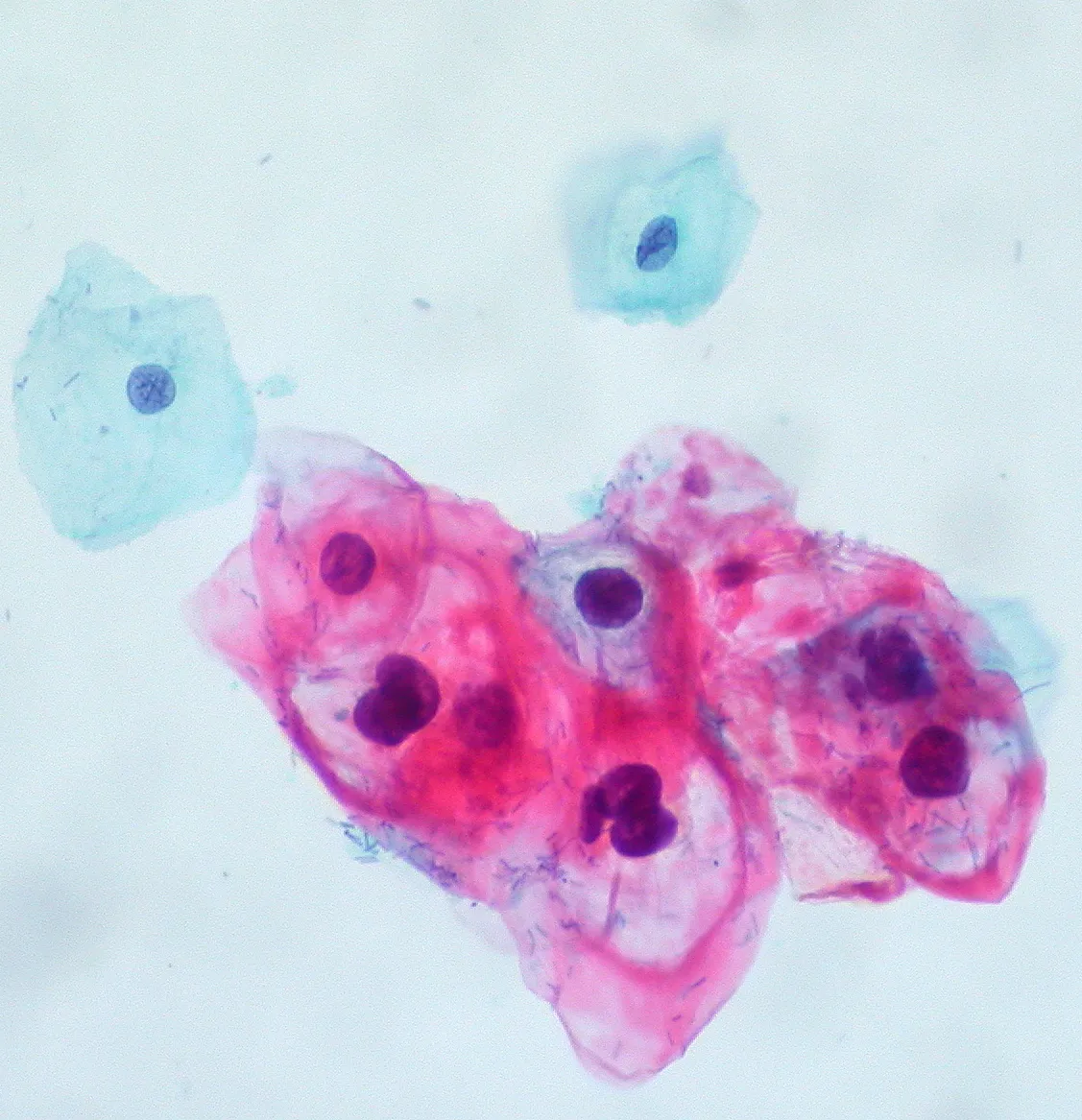
Micrograph: Ed Uthman, CIN 1/HPV on ThinPrep, CC BY-SA 2.0. Unmodified.

Where this comes from
- American Cancer Society (ACS): accessed 2026-10-22
- U.S. Preventive Services Task Force (USPSTF): accessed 2026-10-22
- National Cancer Institute (NCI): accessed 2026-10-22
- World Health Organization (WHO): accessed 2026-10-22
- ACOG (American College of Obstetricians and Gynecologists): accessed 2026-10-22
- ASCCP (American Society for Colposcopy and Cervical Pathology): accessed 2026-10-22
- NCI (PDQ, patient version): accessed 2026-10-22
- ACOG (Practice Advisory): accessed 2026-10-22
- USPSTF (recommendation published in American Family Physician / AAFP): accessed 2026-10-22
- North Dakota Department of Health and Human Services: accessed 2026-10-22
- HHS (HIV.gov): accessed 2026-10-22
- NIH (HIVinfo): accessed 2026-10-22
- Canadian Cancer Society: accessed 2026-10-22
- Cancer Council Australia: accessed 2026-10-22
- Cancer Council Australia: accessed 2026-10-22
This is educational content, meant to help you understand your body. It is not a medical consultation or a diagnosis, and it does not tell any particular person what to do. If something worries you, see a doctor you trust.