
You asked
Someone I love snores and sometimes stops breathing in their sleep. What should I do?
This question came from the comments on this video:
 A pill for sleep apnea .. this could change everything
Hearing Spanish on YouTube? Tap ⚙ › Audio track › English
Have their doctor check it: snoring with breathing pauses is a warning sign of sleep apnea. Tell the doctor how long the pauses last, if they end in a gasp, and if they doze off by day. Untreated, it raises heart attack and stroke risk, and it's treatable. The doctor decides if a sleep study is needed to confirm it.
Why does the airway close during sleep, and what does extra weight have to do with it?
During sleep, the throat muscles relax, and the tongue can fall back and block the airway. Extra weight adds fat in the neck that narrows the airway, so it closes more easily. Losing weight can help prevent or treat apnea in those cases. Alcohol makes it worse because it relaxes those muscles even more.
If I snore but don't wake up, what other signs point to sleep apnea?
Snoring isn't always apnea, and people who have apnea often don't fully wake up. The awakenings are brief and not remembered, so the clues are different. For example, someone sees you pause or gasp asleep, and you feel very sleepy by day. It can be hard to concentrate, remember things or make decisions.
What works: CPAP, mouth guards, nasal strips or implants? And who prescribes them?
CPAP keeps the airway open with air pressure. A doctor prescribes it once apnea is confirmed, then checks how you're doing. If you can't tolerate CPAP, a mouthpiece that moves the jaw forward is an option, made by a dentist. If that doesn't work, surgery is considered, like an implant that stimulates the tongue nerve.
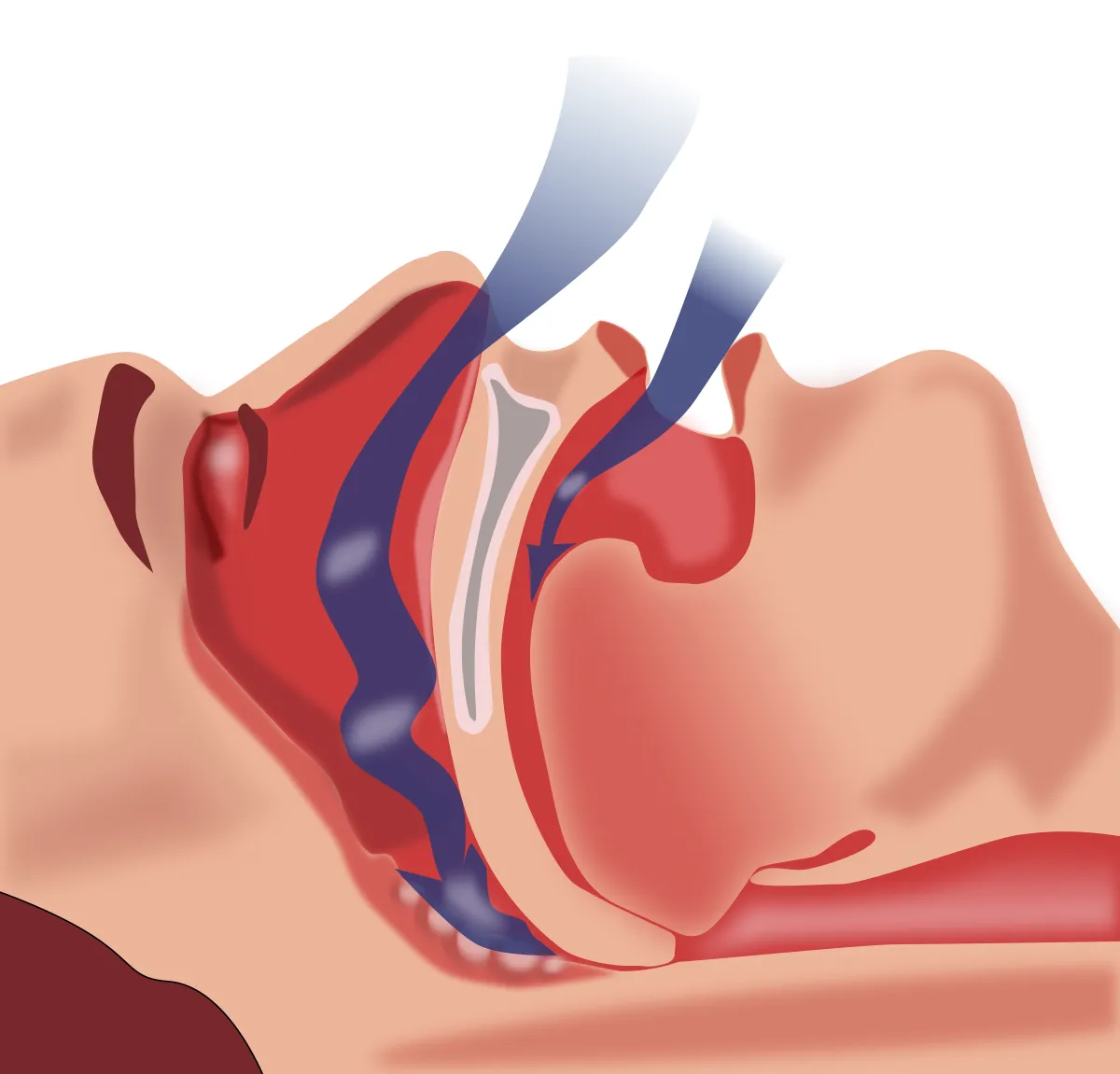
Illustration: Habib M'henni, Obstruction ventilation apnée sommeil, public domain. Palate texture replaced with flat gray and resized for web.

Where this comes from
- NHLBI (NIH): accessed 2026-10-14
- NHLBI (NIH): accessed 2026-10-14
- American Academy of Sleep Medicine (AASM): accessed 2026-10-14
- AASM / American Academy of Dental Sleep Medicine (AADSM): accessed 2026-10-14
- NHLBI (NIH): accessed 2026-10-14
- MedlinePlus (NLM/NIH): accessed 2026-10-14
- American Academy of Sleep Medicine (AASM): accessed 2026-10-14
- NHLBI (NIH): accessed 2026-10-14
This is educational content, meant to help you understand your body. It is not a medical consultation or a diagnosis, and it does not tell any particular person what to do. If something worries you, see a doctor you trust.