
You asked
What does HIV look like under a microscope?
This question came from the comments on this video:
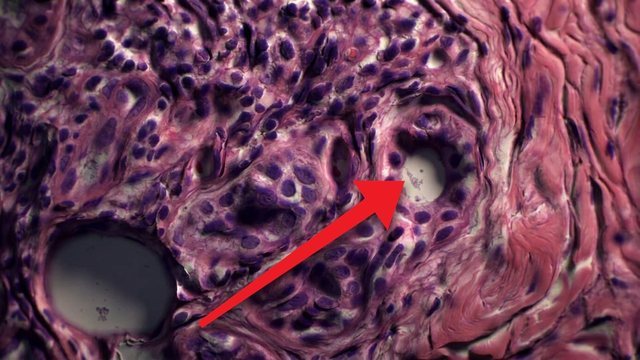 Syphilis: the infection that disguises itself as almost any disease
Hearing Spanish on YouTube? Tap ⚙ › Audio track › English
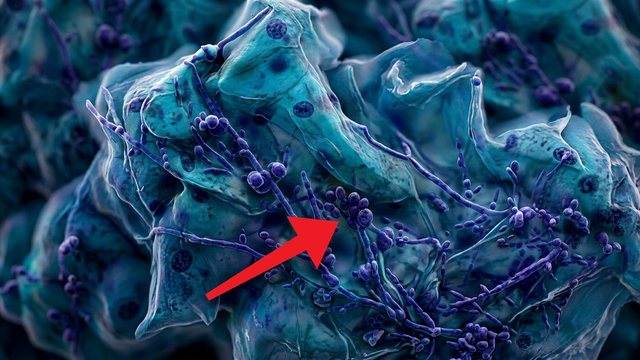
You can't see it with the regular light microscope used in a pathology lab. HIV is about 100 nanometers wide, a thousandth the thickness of paper. An electron microscope can show it, down to the layered protein shells inside. To find it, doctors use blood tests, such as viral load and antibody tests.
If the stomach is so strong, why doesn't it destroy HIV when it gets in?
Stomach acid does kill many germs, but HIV doesn't come in that way. It goes straight into the blood or through mucous membranes, so the acid never reaches it. Once HIV is inside, most CD4 cells, the immune cells it attacks, are lost in the gut.
What do your cells look like when they're infected with HIV, or once it has become AIDS?
Unlike herpes or HPV, HIV leaves no changes in cells you can spot under the microscope. What can be measured is its effect: a drop in CD4 cells, the immune cells it destroys. Once it becomes AIDS, the microscope does show something. It shows the opportunistic infections that take hold when defenses are low.
What can you do to protect yourself from HIV?
Condoms are the foundation, and they also protect against other sexually transmitted infections. For people at higher risk, PrEP adds a medicine taken before exposure. People with HIV who stay on treatment also lower the risk of passing it on. After a risky exposure, PEP only works if started within 72 hours.
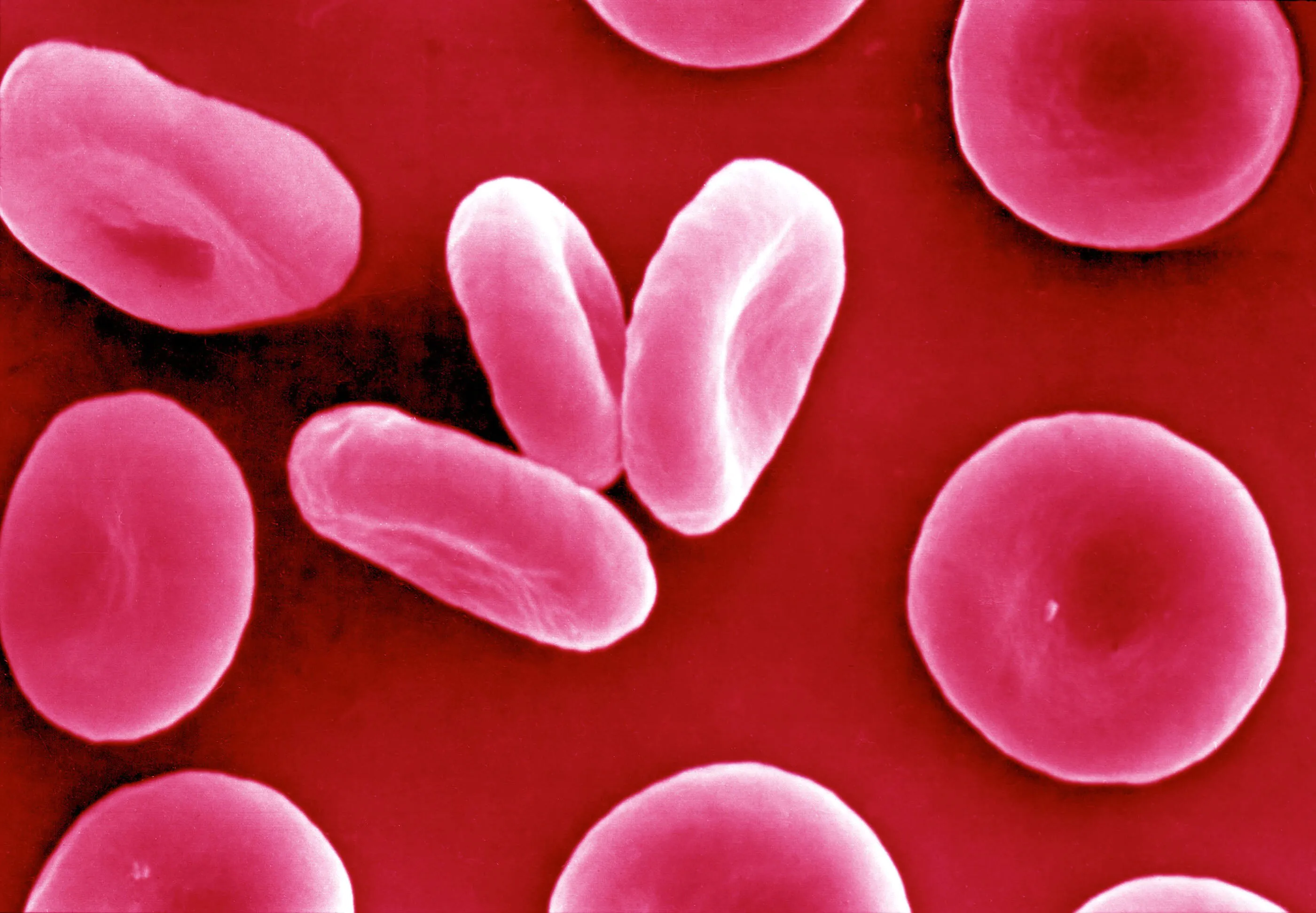
Micrograph: David Gregory and Debbie Marshall, Red blood corpuscles, Wellcome Collection, CC BY 4.0. Unmodified.
Where this comes from
- WHO: accessed 2026-10-15
- NIH (HIVinfo): accessed 2026-10-15
- Wright et al., EMBO J 2007: accessed 2026-10-15
- Brenchley et al., J Exp Med 2004: accessed 2026-10-15
- NIH (HIVinfo, Office of AIDS Research): accessed 2026-10-15
- NIH (HIVinfo, Office of AIDS Research): accessed 2026-10-15
- WHO: accessed 2026-10-15
- Southern African Journal of HIV Medicine (Southern African HIV Clinicians Society): accessed 2026-10-15
This is educational content, meant to help you understand your body. It is not a medical consultation or a diagnosis, and it does not tell any particular person what to do. If something worries you, see a doctor you trust.