Blood · Pregnancy · Visual journey

Antiphospholipid syndrome: when blood clots where it shouldn’t.

A blood clot in the leg and a pregnancy loss can have the same root cause: antibodies that attack your own body. Either one can be the first sign.

It’s more common in women, but it also affects men, and it can start at any age.
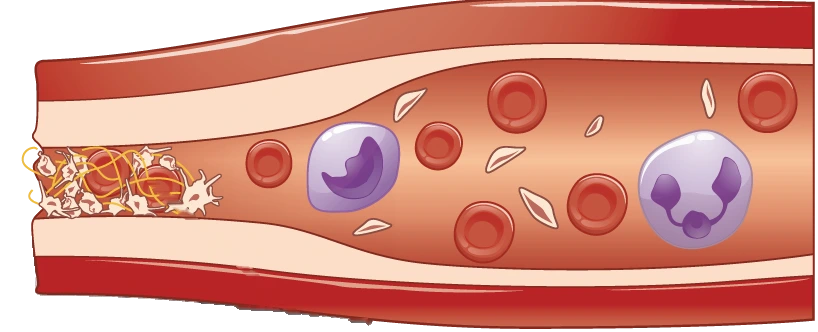
Illustration of the torn end of a blood vessel sealed by a plug of platelets laced with yellow strands of fibrin; red and white blood cells flow inside the vesselPlug at the tearPlatelets held in place by strands of fibrin

Blood vessel

A normal clot is a repair.

When a blood vessel tears, platelets, which are fragments of cells, plug the tear and fibrin weaves a mesh over it. Without an injury, clotting stays switched off.

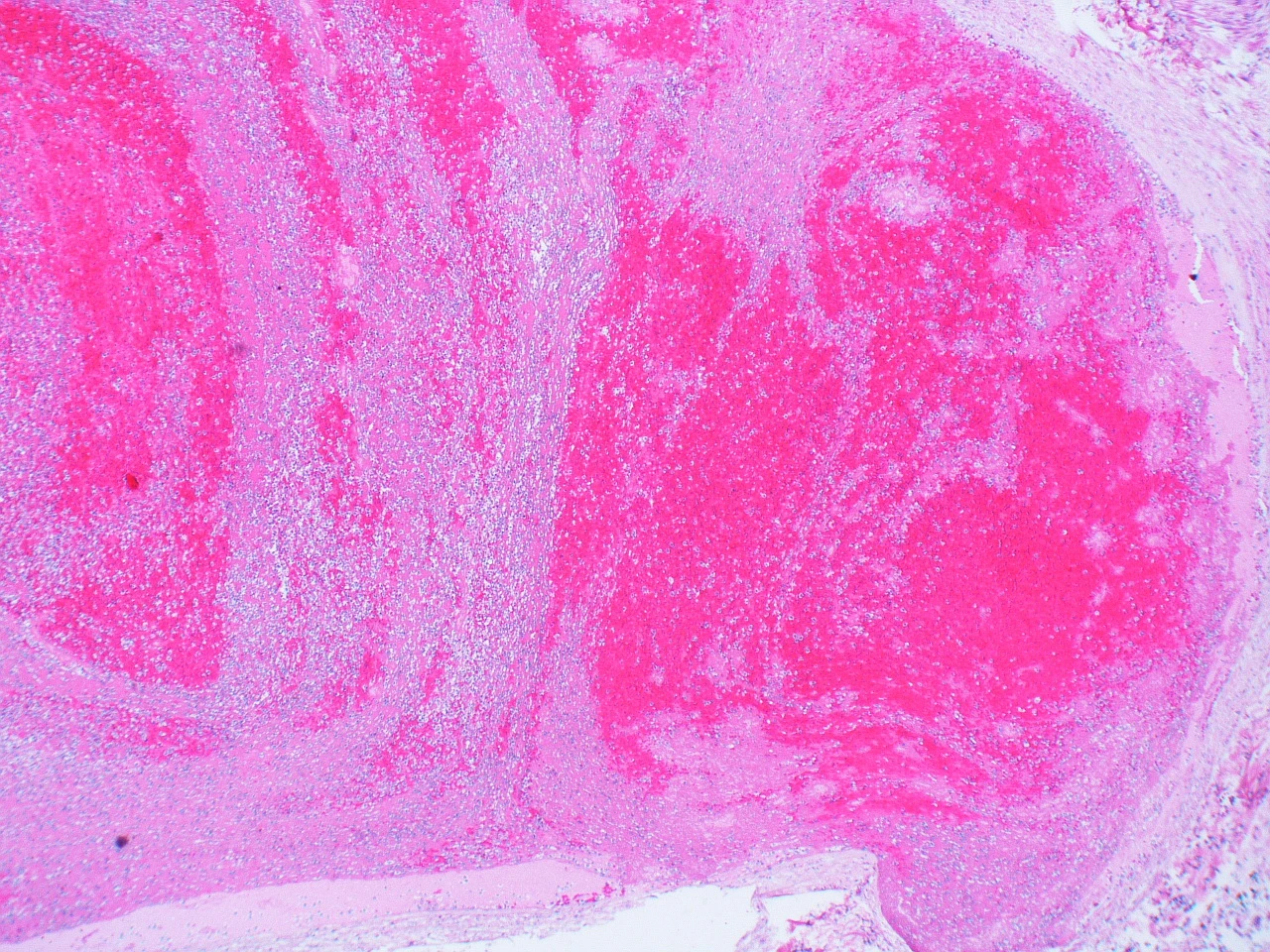
Blood clot under the microscope, shown in relief: pale streaks of fibrin and platelets winding between dense red patches of red blood cells

Under the microscope

A clot where it shouldn’t be.

A clot lodged in an artery in the lung: pale layers of fibrin and platelets alternate with red layers of red blood cells. In this syndrome, blood clots too easily, in both veins and arteries.

Take a closer look

Under the microscope

The same clot, up close.

Those alternating layers are called lines of Zahn.

Section of a clot lodged in an artery in the lung: pale bands of fibrin and platelets alternate with red areas packed with red blood cells
Pale: fibrin and platelets, the same mesh that forms in a wound.Red: trapped red blood cells.

The cause

Why does blood clot where it shouldn’t?

Four steps, from the body’s normal defenses to a clot.

  1. Antibodies protect you.

    They tag germs so your body can destroy them.

  2. Here, they go after the wrong target.

    They attack normal proteins in your blood.

  3. Blood clots too much.

    The protein under attack changes shape and switches on clotting even though there’s no injury.

  4. Clots and pregnancy.

    Clots form in veins and arteries, and pregnancy complications become more likely. Still, some people have these antibodies and never get a clot.

In a vein

A clot in a deep vein (in the leg, thigh or pelvis) is called deep vein thrombosis. If a piece travels to the lungs and blocks an artery, that’s a pulmonary embolism.

In an artery

A clot can cause a heart attack or a stroke.

The other sign

The same syndrome can show up during pregnancy.

It’s linked to pregnancy loss, preeclampsia (high blood pressure brought on by pregnancy), premature birth and a placenta that doesn’t grow as much as it should.

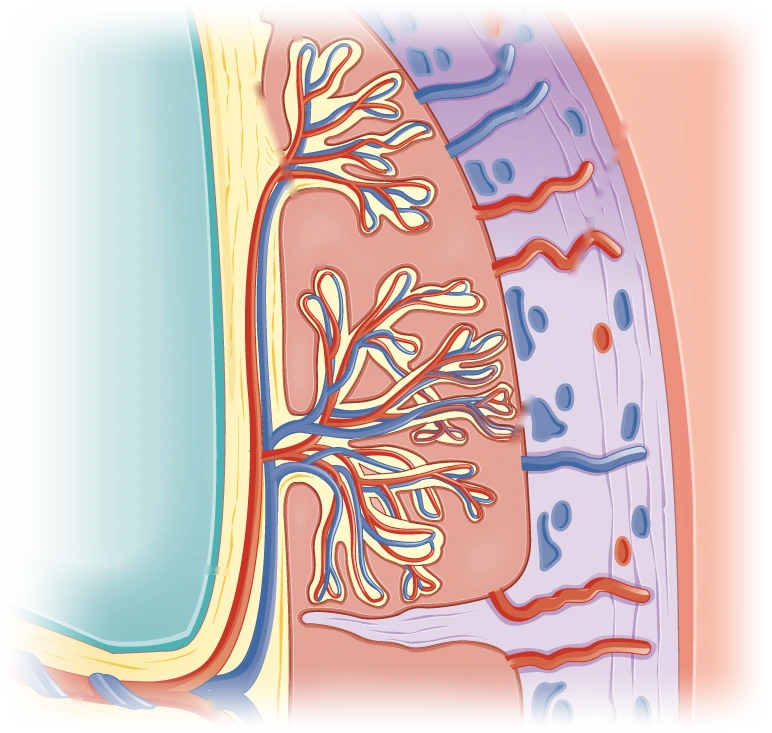
Close-up illustration of a placenta: branching villi with red and blue blood vessels, surrounded by the mother’s blood, next to the wall of the uterusVillusThe baby’s blood inside; the mother’s blood outside

A normal placenta, up close.

The baby’s blood flows inside the villi, and the mother’s blood surrounds them. Oxygen and nutrients pass across without the two ever mixing.

With this syndrome, the placenta can implant poorly, and the arteries in the uterus don’t widen.

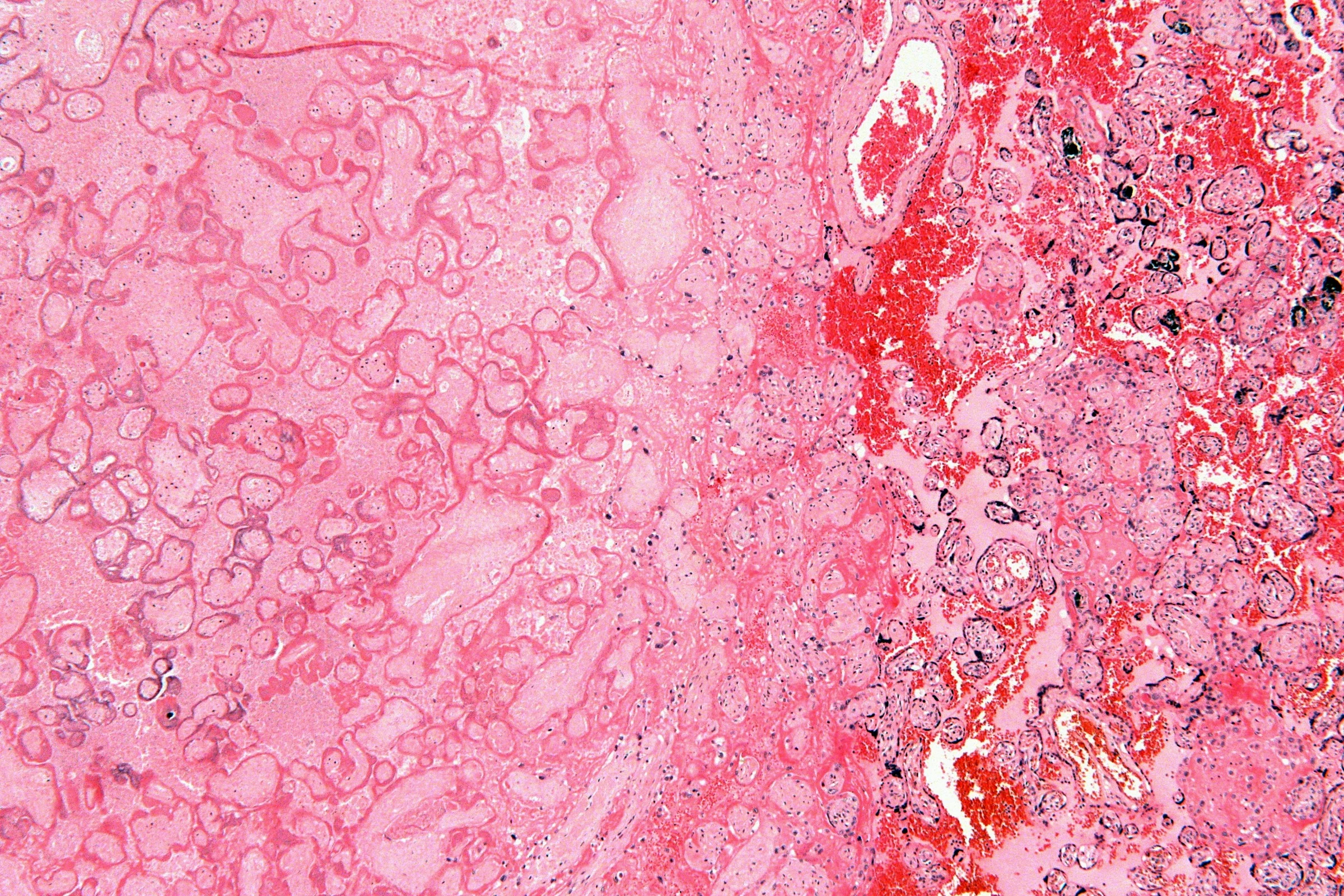
Placental infarct under the microscope: on the left, pale tissue with no blood between the villi; on the right, placenta with red blood between the villi

When the placenta doesn’t get enough blood.

Without enough blood, part of the placenta dies. This is called an infarct. It looks pale, with no blood between the villi.

What you can control

Finding out early changes what you can do.

There’s no cure, but treatment prevents new clots and keeps existing ones from growing. And people with this syndrome can have successful pregnancies.

What you can do

Had a blood clot with no clear cause, or pregnancy losses? Ask your doctor about testing for these antibodies.

Testing is offered after an unexplained clot, three or more pregnancy losses, a loss between weeks 16 and 34, or severe preeclampsia before week 34.

The diagnosis is confirmed with blood tests repeated about three months apart, in someone who has had a blood clot or pregnancy complications.

Why it helps: there’s treatment to prevent another clot and to help you plan a future pregnancy.

If you’ve been diagnosed

If you’re pregnant or planning to be, tell your doctor.

Without treatment, the risk of pregnancy loss and preeclampsia goes up. There are medicines to prevent clots, and ultrasounds to keep an eye on the baby.

If you take blood thinners (anticoagulants)

Your doctor decides which medicine and what dose.

Don’t stop taking them on your own, and tell your doctor everything you take, even supplements. Check with your doctor before any procedure or new medicine: birth control that contains estrogen raises the risk of clots.

I’m your friend, Dr. Carlo De la Sancha. Health and Science for all.

Keep learning

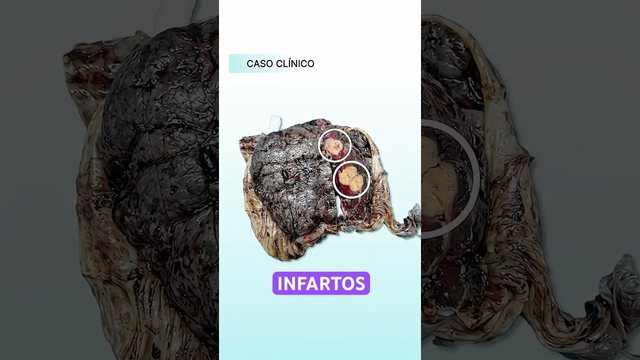
What does a placenta with infarcts look like?

This placenta has infarcts .. this is how preeclampsia works from the insideWatch the video “This placenta has infarcts”
Medical transparencySources, images and licenses

Where the information comes from

Images

In the two textbook illustrations, the label lines were erased and the edges were blended into the background; none of the anatomy was redrawn. The opening microscope image is a version of the clot micrograph with more depth and contrast. The infarct micrograph was only adjusted for contrast and sharpness.

Educational content for the general public. It doesn’t diagnose antiphospholipid syndrome or recommend treatment. Diagnosis and any decisions about blood thinners or a pregnancy are up to your health care team.

Know someone who would find this helpful?

Share it with them.