
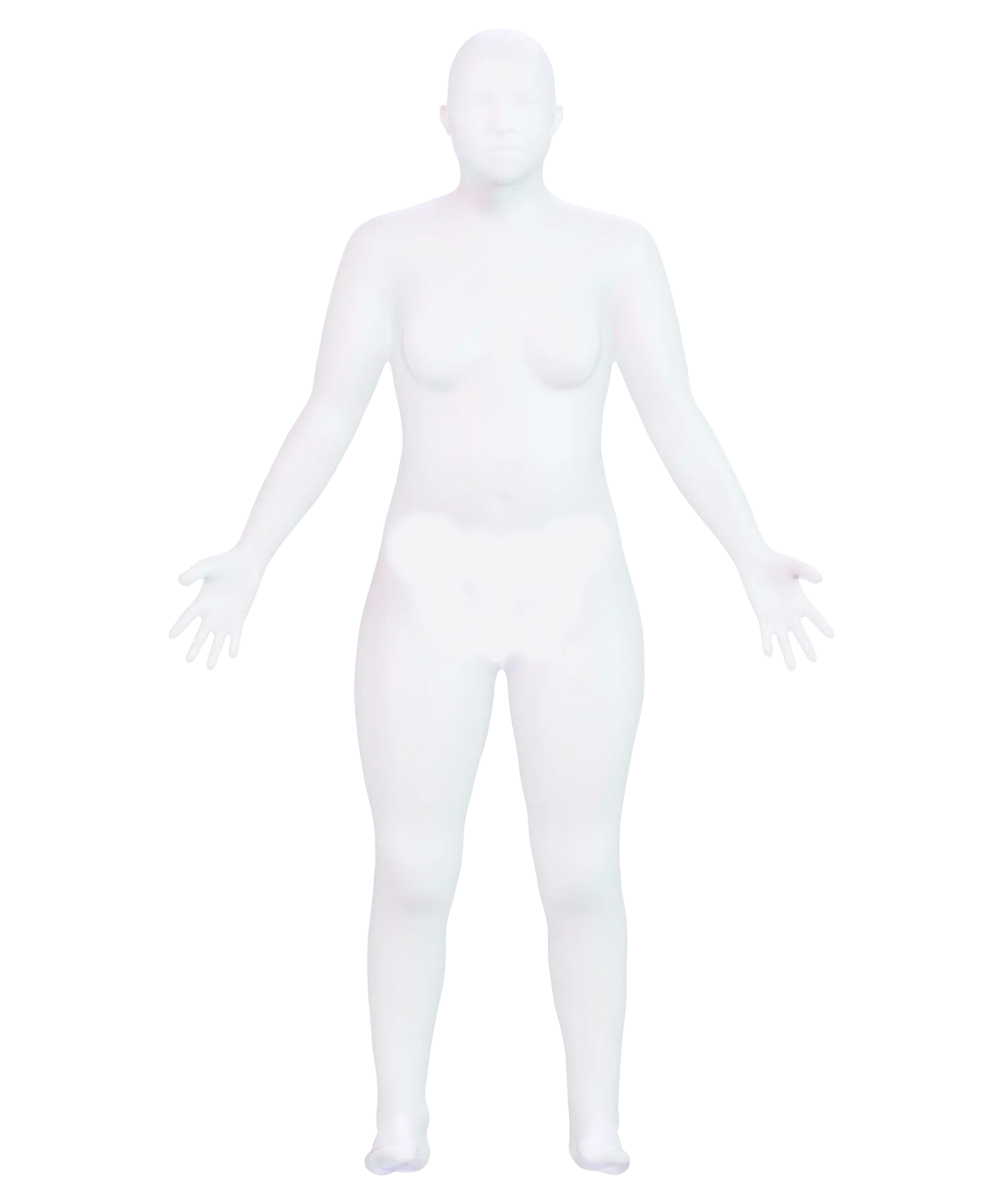
Blood · Visual journey
Blood clots: when they protect you and when they block blood flow.
When you cut yourself, your blood forms a plug that breaks down as the cut heals. But a clot in a leg vein can break loose and travel to the lungs.
Blood · Visual journey
When you cut yourself, your blood forms a plug that breaks down as the cut heals. But a clot in a leg vein can break loose and travel to the lungs.
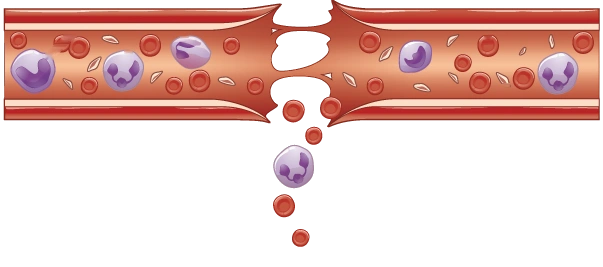 TearThis is where blood leaks out
Blood vessel
The vessel narrows, and platelets, which are fragments of cells, stick to the tear and form a plug.
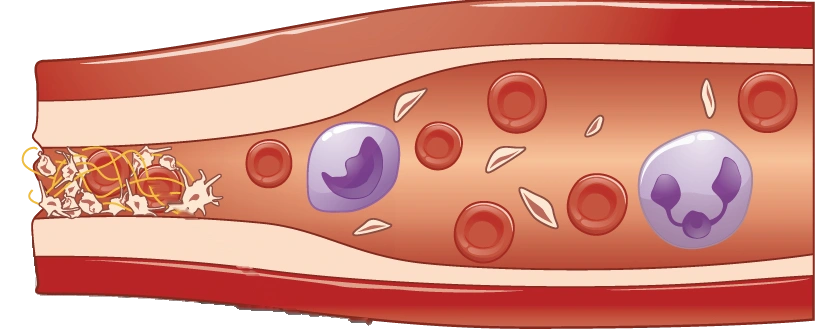 FibrinStrands that hold the plug in place
Plug
One after another, clotting factors turn fibrinogen into fibrin, a web of strands that anchors the plug.
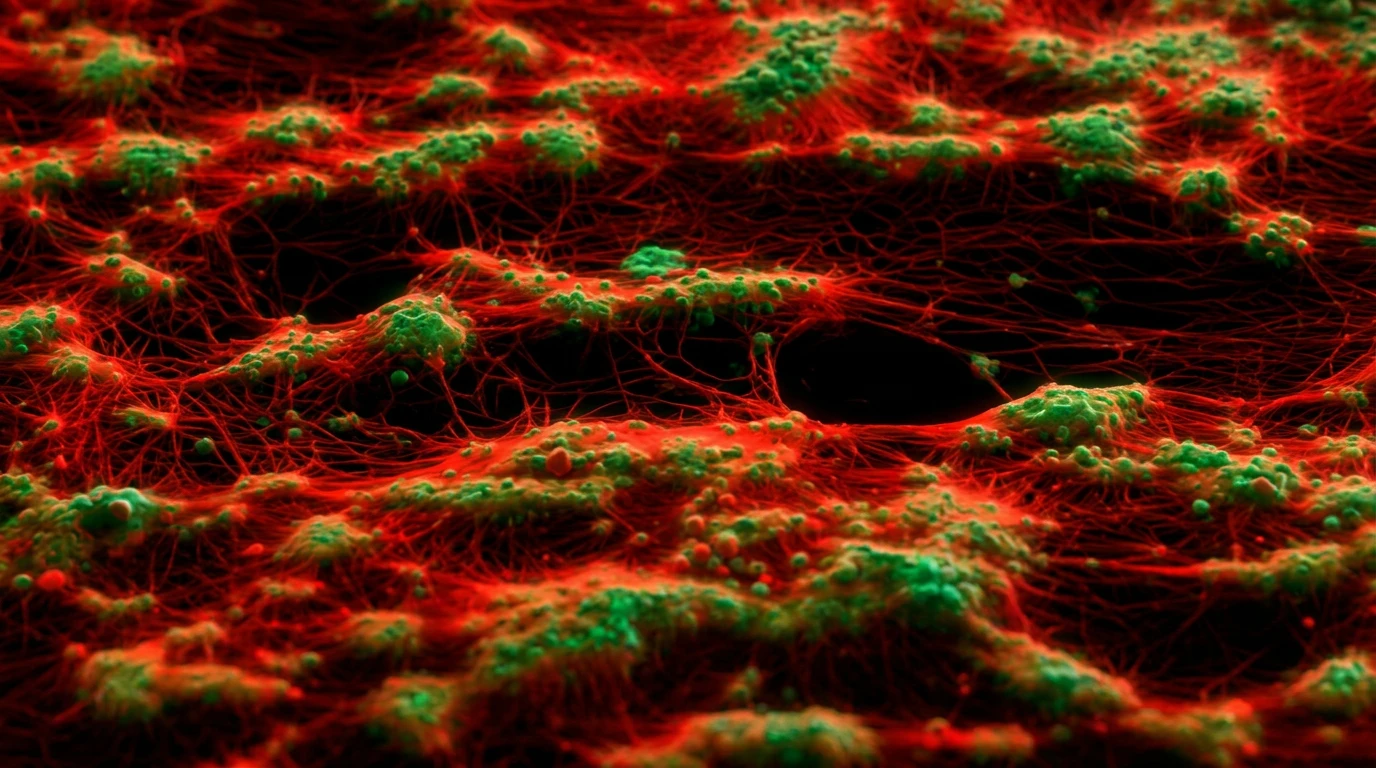
Microscope
Here it is under the microscope, with fibrin in red and platelets in green.
Take a closer look at the micrographUnder the microscope
Fibrin shows up red and platelets green. Where they overlap, they look yellow or orange.
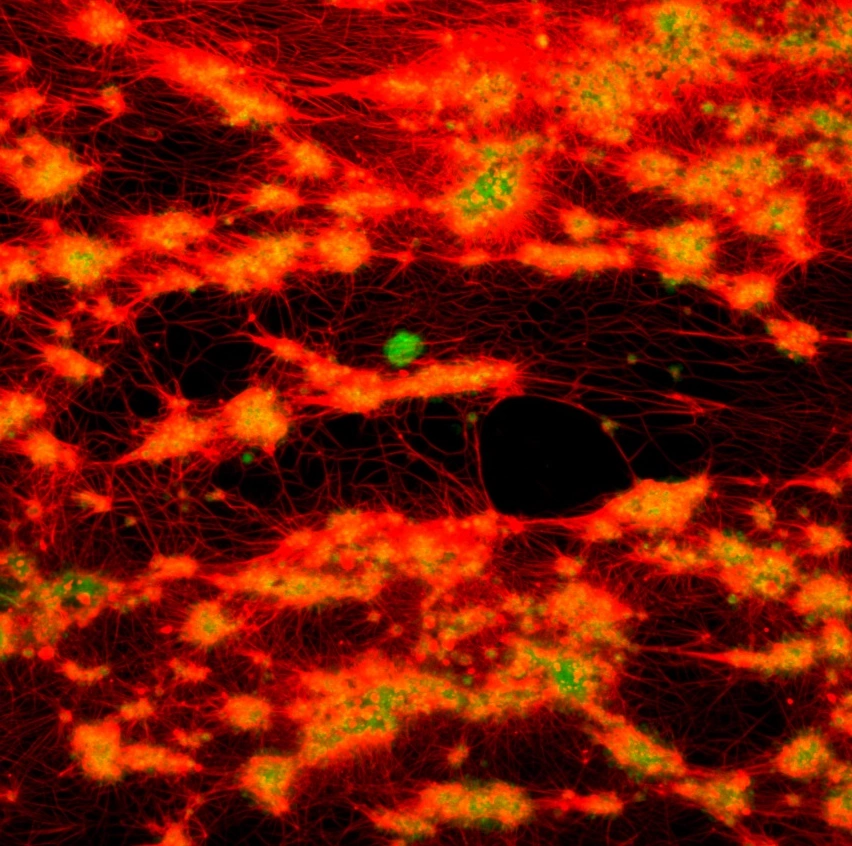
Platelets: they form the first plug.
Fibrin: the mesh that holds that plug in place.
That mesh depends on vitamin K.
Vitamin K
Your liver needs vitamin K to make several clotting factors, and an enzyme recycles the vitamin so the liver can use it again. That recycling step is exactly where one medicine and one poison strike.
A medicine
As a result, the liver makes fewer active clotting factors. That’s what makes warfarin an anticoagulant, or blood thinner.
It doesn’t dissolve clots. Instead, it keeps existing clots from getting bigger and new ones from forming.
A poison
They block the same enzyme, but with no doctor keeping the dose in check. Bleeding can take as long as five days to start.
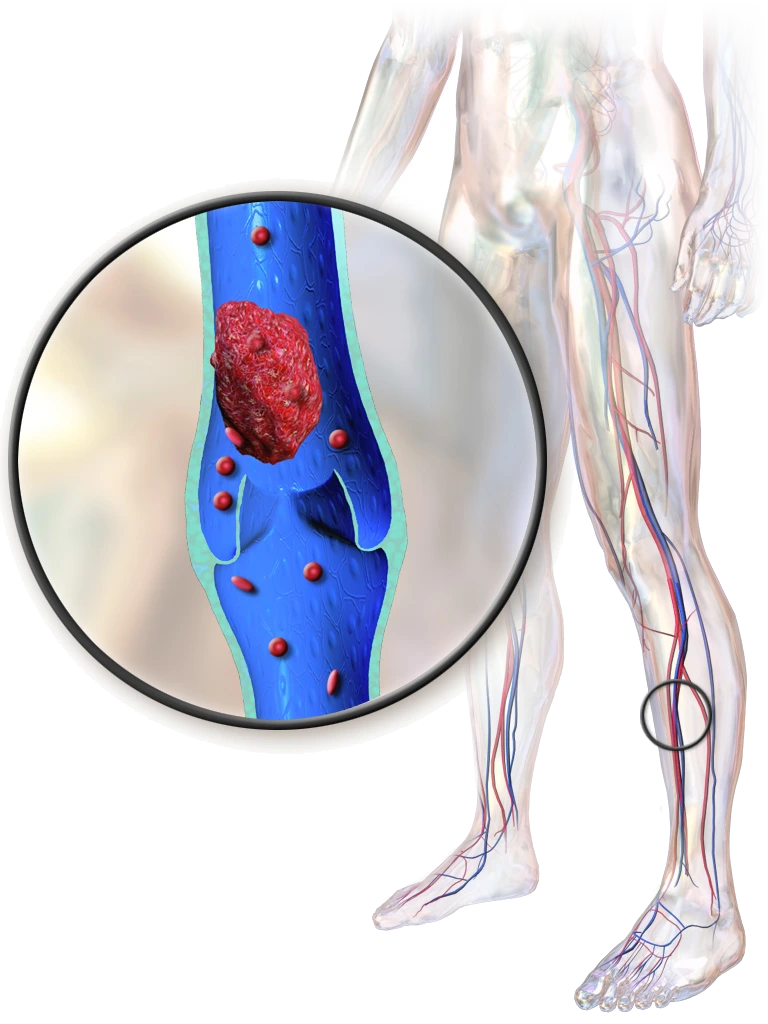 ThrombusA clot inside the vein, with no wound to seal
When a clot forms where it shouldn’t
This is deep vein thrombosis, or DVT. It usually forms in the calf, thigh or pelvis.
The risk goes up after hours without moving or after surgery, and with cancer, pregnancy, birth control or hormone therapy.
From the leg to the lungs
That piece, called an embolus, passes through the heart and blocks an artery in the lung. This is a pulmonary embolism, and it can be life-threatening.
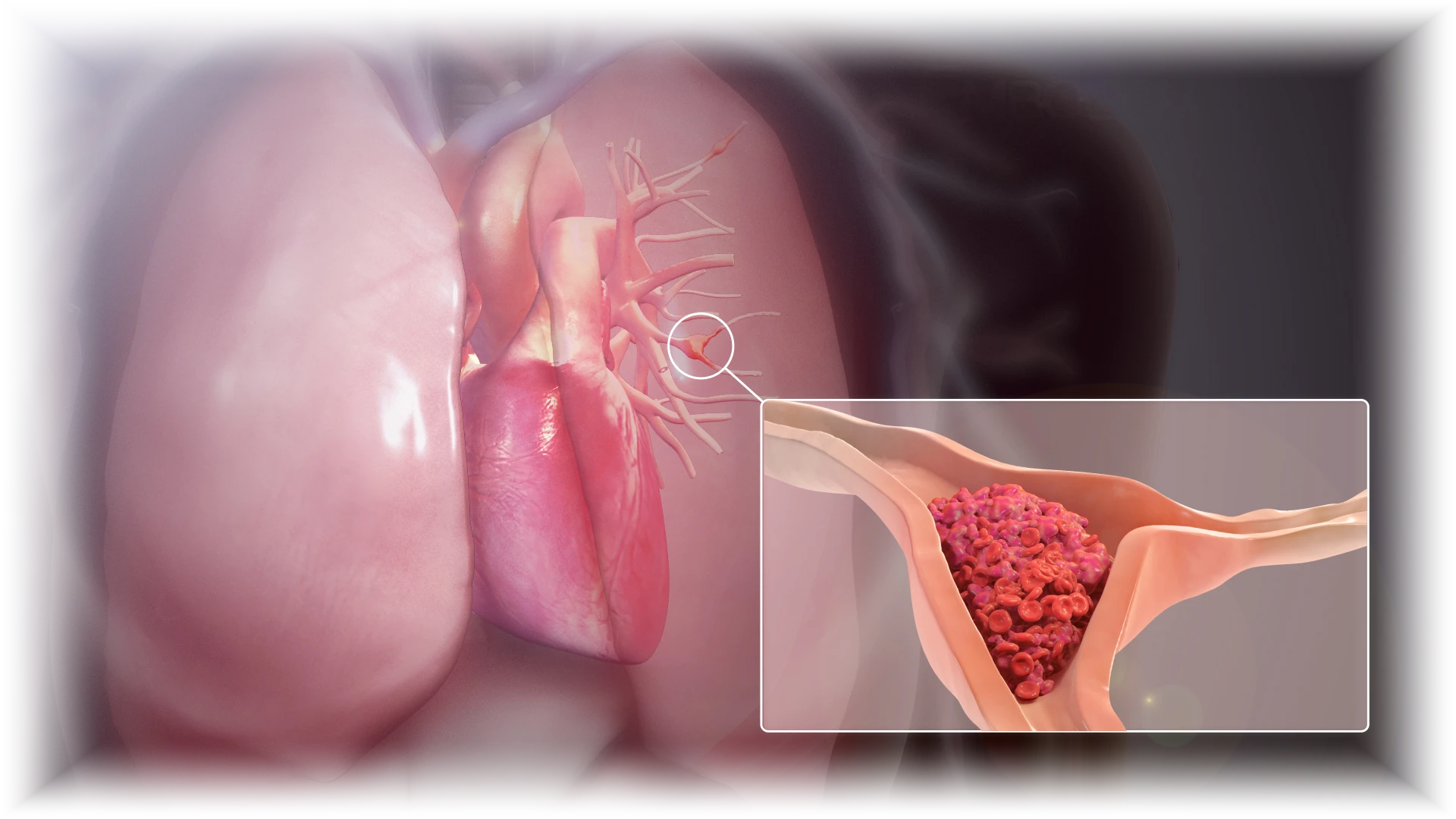 EmbolusThe clot that traveled here blocks an artery in the lung
What you can control
Not every clot can be prevented. But staying active and spotting the signs early are things you can do.
What you can do
If you can’t get up, move your ankles and knees.
Before surgery or a hospital stay, ask your care team about a plan to prevent clots.
Don’t change the dose on your own, get your INR checked on schedule and keep the amount of vitamin K in your diet steady. Check with your doctor before adding any medicine, supplement or aspirin.
Watch for nosebleeds or bleeding gums that won’t stop, pink or brown urine, red or black stools, bruising, coughing up or vomiting blood, and dizziness or weakness.
Could someone have eaten rat poison? Call 911 or Poison Control now, even if they seem fine. If it’s a pet, call your vet.
I’m your friend, Dr. Carlo De la Sancha. Health and science for everyone.
Why can cancer lead to blood clots?
 Watch “Catherine O’Hara didn’t die of cancer. She died of this”
In the illustrations, the original English labels were erased and the white background was made transparent; none of the anatomy was redrawn. The opening microscope image is a version of the cited micrograph with more depth, and the micrograph itself appears cropped further down the page. The arrows were added for this page.
Educational content for the general public. It doesn’t diagnose blood clots or pulmonary embolism, and it doesn’t recommend treatment. Diagnosis and any decisions about blood thinners are up to your health care team.