Keep exploring
Lung · Visual journey
Breathing depends on walls that are almost invisible.
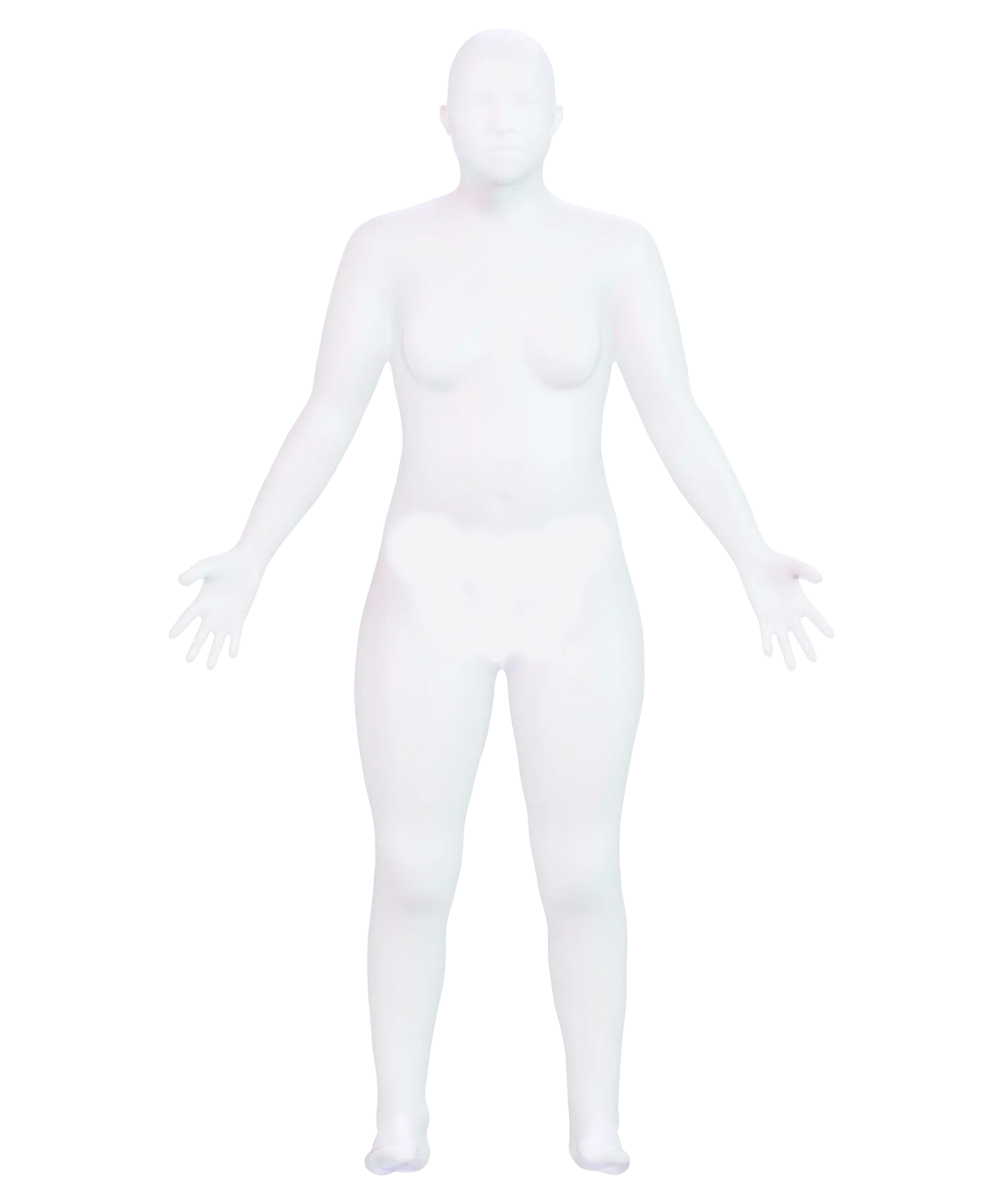
The journey moves from the chest to the alveolus, then to the spaces left when emphysema destroys the walls between alveoli.
Begin the journeyScroll to change scale
Organ
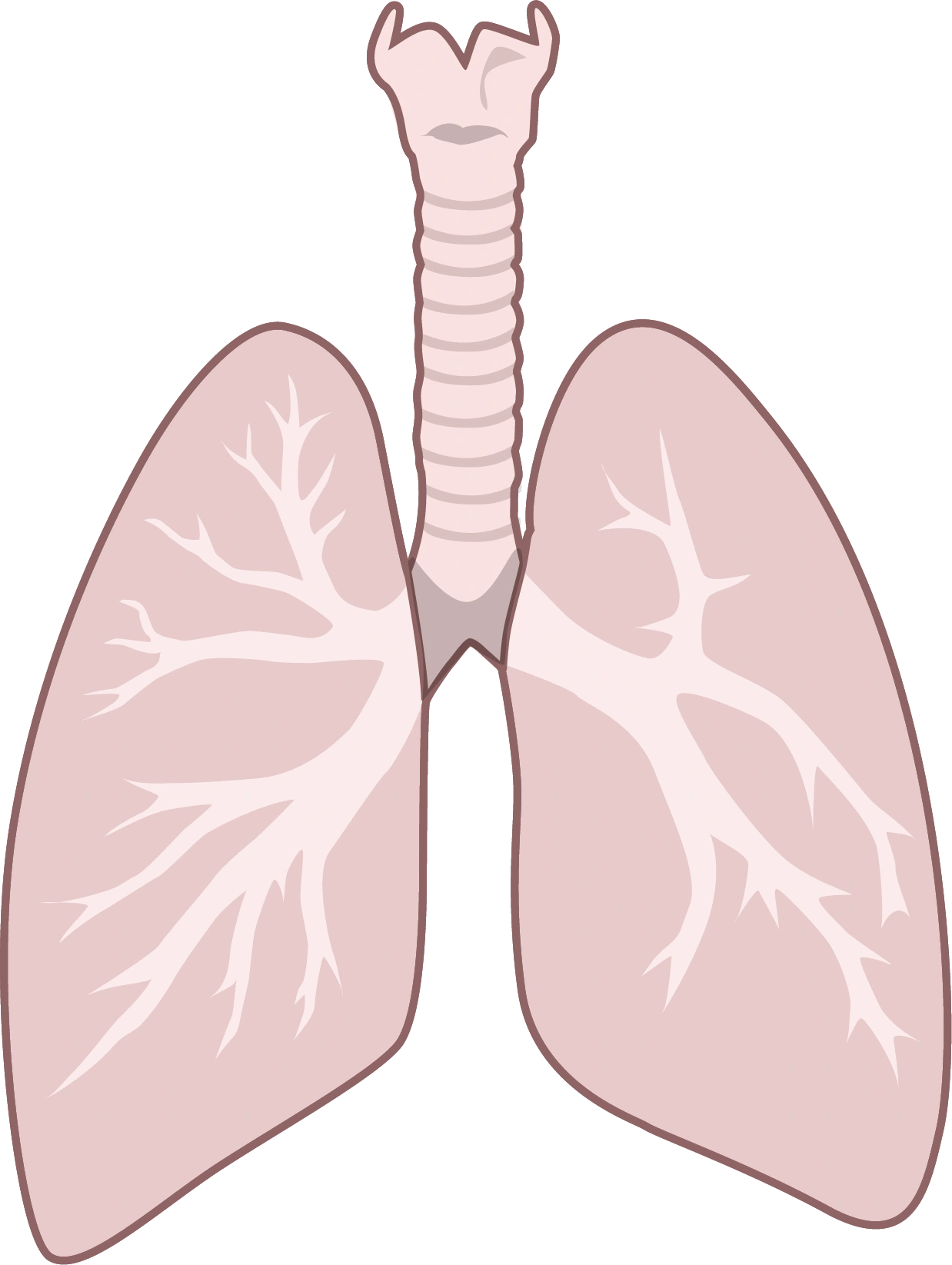
The lung.
Air travels through progressively smaller branches until it reaches the place where gas exchange actually happens.
Functional unit
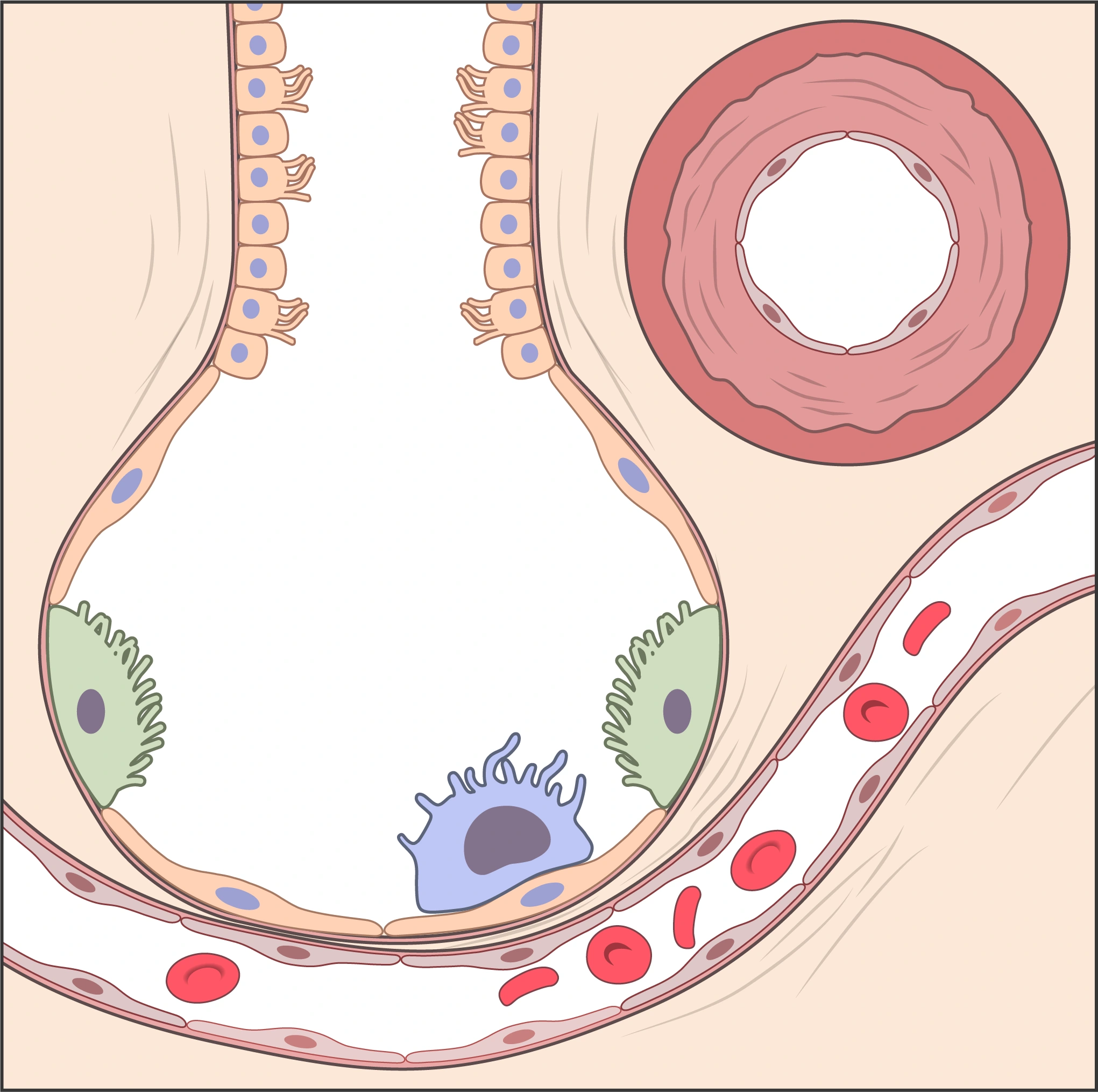
The alveolus.
Each alveolus is a thin-walled sac. Air is on one side and blood on the other. That is where oxygen enters and carbon dioxide leaves.
Cellular scale
The alveolar septum.
Two neighboring alveoli share a septum. This thin wall provides support for capillaries and keeps gas-exchange distances extremely short.
Under the microscope
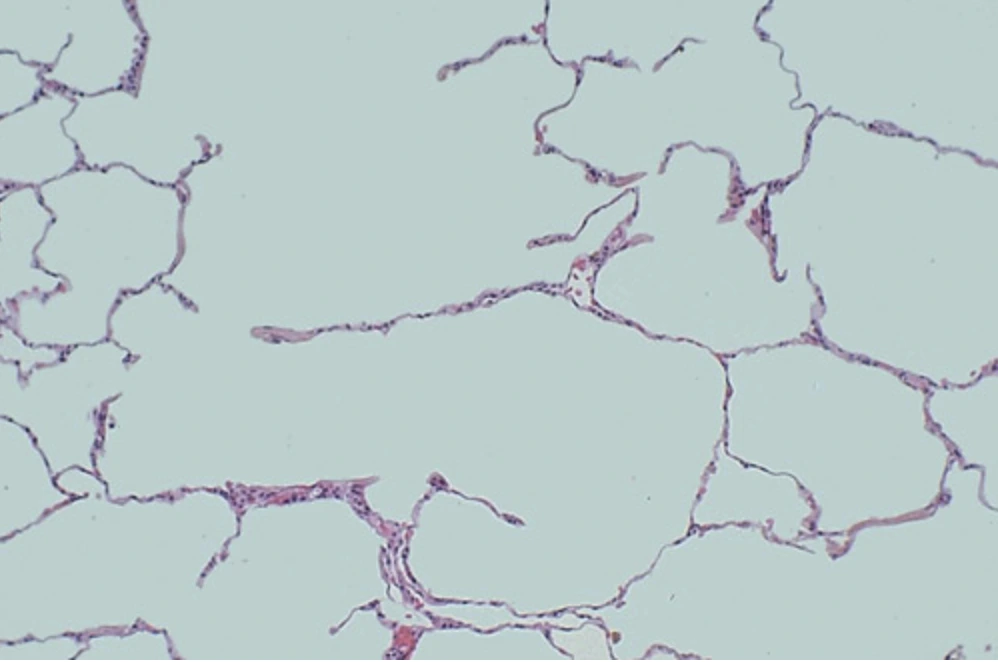
Emphysema.
The walls between alveoli are destroyed. Air spaces become larger, leaving less surface available for gas exchange.
Compare the tissueEvidence under the microscope
Normal lung and emphysema.
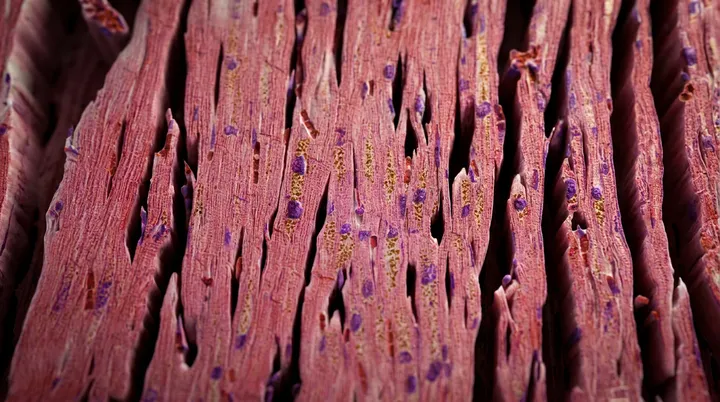
In a normal lung, many small alveoli retain their septa. In emphysema, those walls are lost and much larger air spaces remain.
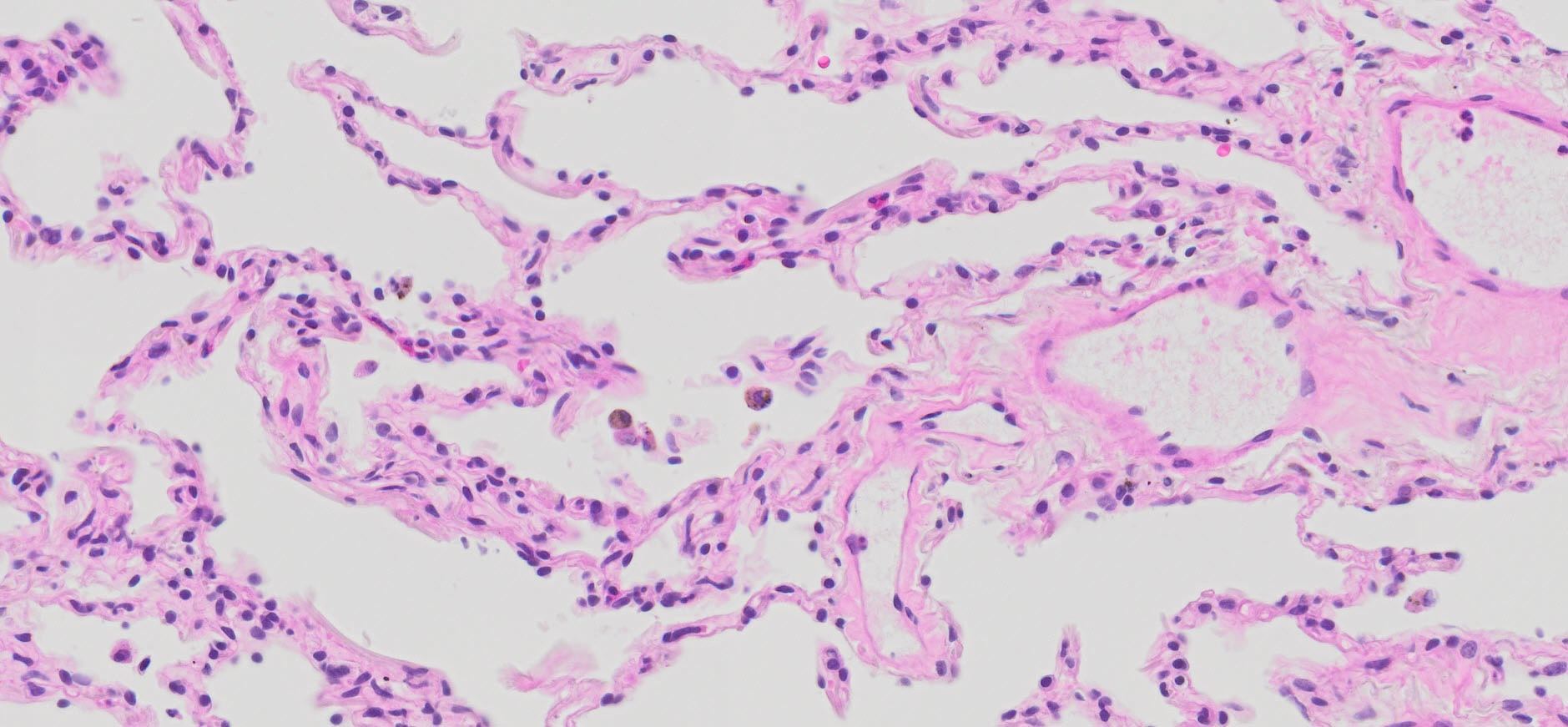 Normal lung
The air spaces retain their thin walls. Each septum adds surface area for gas exchange.
Human lung · H&E · magnification not reported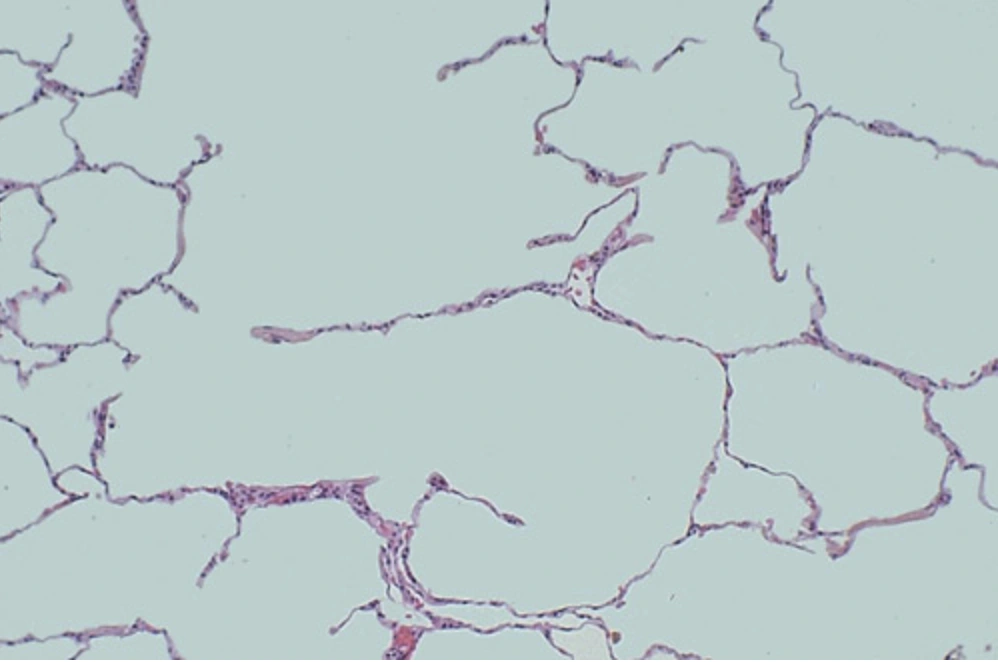 Emphysema
When these walls break down, several alveoli merge into much larger spaces. Less surface area remains for gas exchange.
Human lung · stain unconfirmed · magnification not reportedStructural damage is not inevitable, and acting early matters.
What you can influence
Protect the walls before they are lost.
The most important measure is to keep smoke out of the lungs. Other choices limit the damage that accumulates and help detect disease earlier.
- Do not smokeIf you smoke, quitting is the most important action. Ask for medical support; quitting does not depend on willpower alone.
- Avoid secondhand smokeKeep your home and car free of smoke and vaping aerosol.
- Protect yourself at workIf you breathe dust, fumes, or chemicals, use the recommended environmental controls and a respirator.
- Do not treat symptoms as normalA persistent cough, wheezing, or shortness of breath deserves evaluation and, when appropriate, spirometry.
Medical transparencySources and scope
Visual provenance, medical evidence, and editorial transformations.
- Human Reference Atlas, NIH 3D .. CC BY 4.0
- NIAID / Ryan Kissinger, NIH BioArt .. Public domain
- NIAID / Ryan Kissinger, NIH BioArt .. Public domain
- Clinical image provided by Dr. Carlo De la Sancha
- Clinical image provided by Dr. Carlo De la Sancha
- Alveoli are small sacs where oxygen and carbon dioxide are exchanged across a very thin membrane.
- In emphysema, alveolar walls are destroyed, leaving enlarged air spaces and reducing the surface available for gas exchange.
- Tobacco smoke is the main cause of COPD; secondhand smoke, pollutants and occupational exposures also contribute, and some people carry a genetic risk.
- Not smoking or quitting smoking, avoiding secondhand smoke and reducing exposure to polluted air and occupational respiratory hazards lower the risk of COPD.
The comparison shows one normal lung and one with emphysema; it does not simulate progression or imply equivalent magnification.
Sources verified on August 25, 2026.