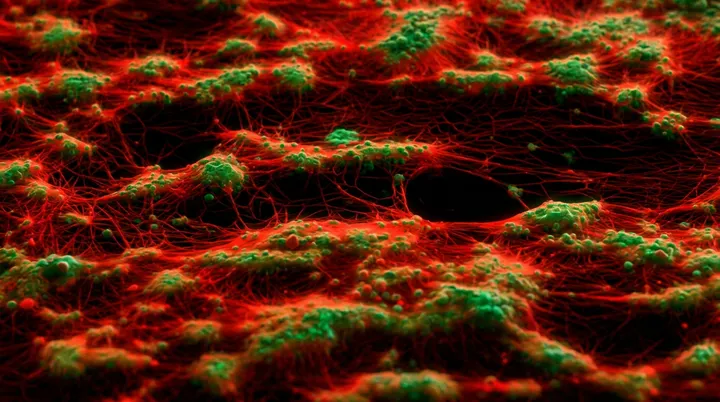
Lungs · Visual journey

A journey into pulmonary hypertension.

When the arteries in the lungs narrow and the right side of the heart wears out.

It’s high blood pressure inside the arteries of the lungs. It shares a name with ordinary high blood pressure, but it’s a different disease.
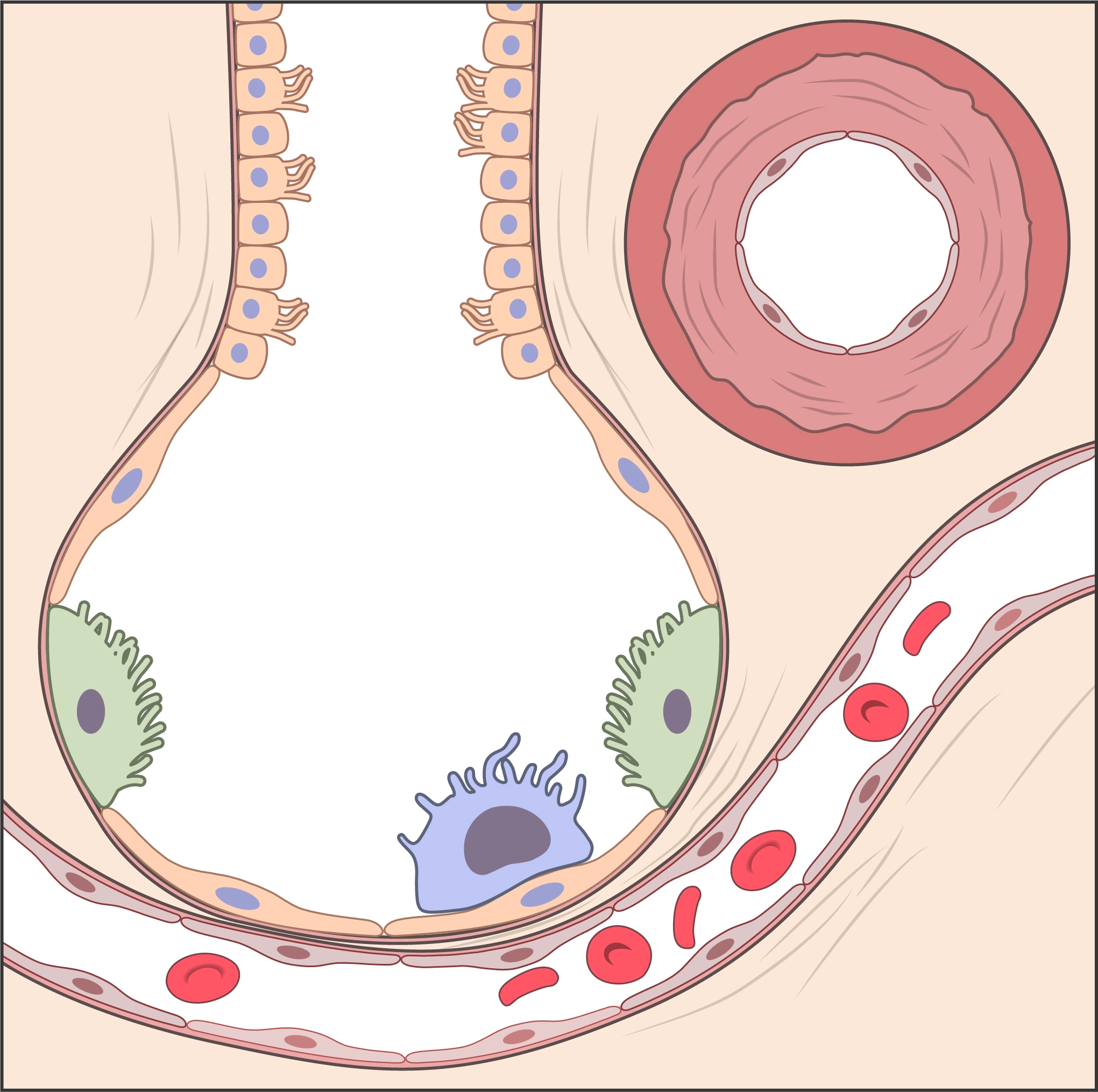
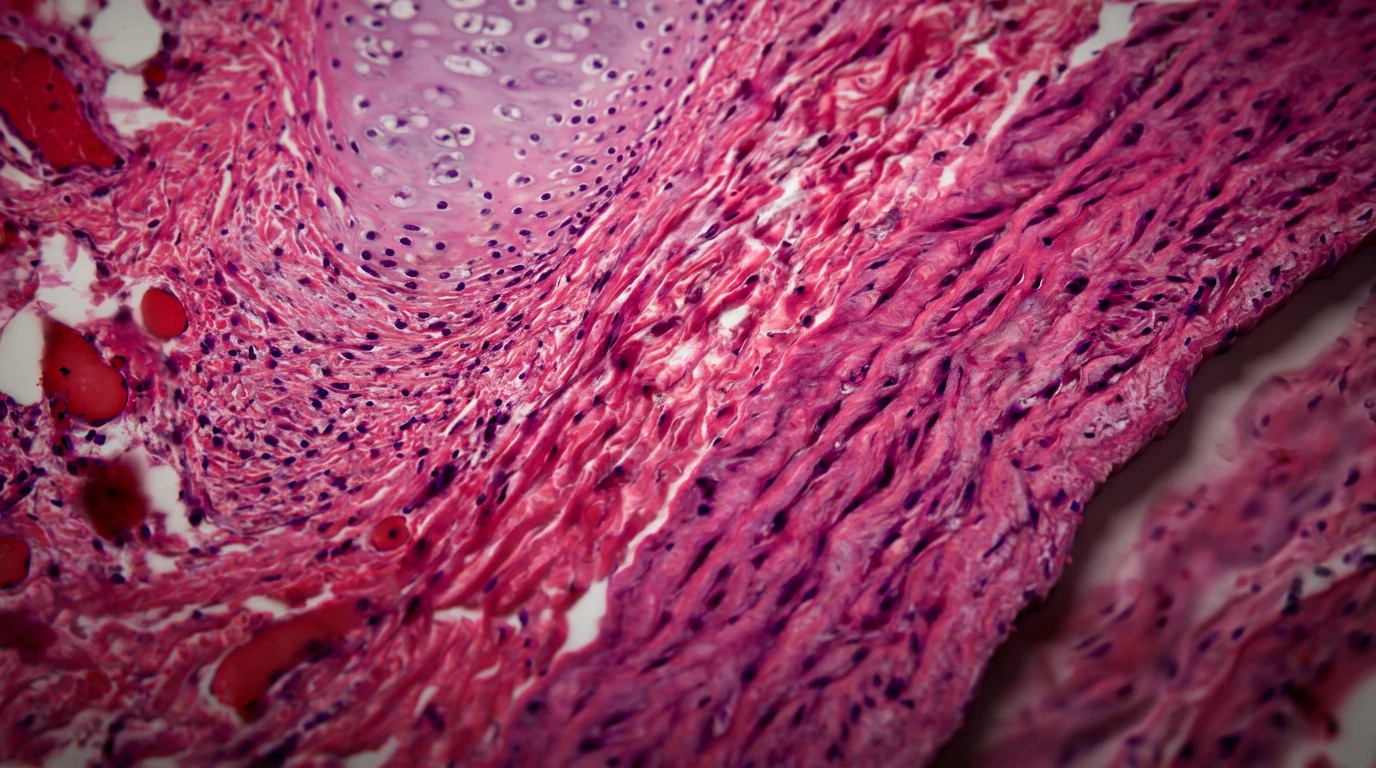
Diagram of an alveolus, one of the lungs’ air sacs, wrapped in a capillary filled with red blood cells, with a cross section of a blood vessel at upper rightCapillaryThis is where blood picks up oxygen from the air

Heart and lungs

The right side of the heart sends blood to the lungs.

It pumps that blood through the pulmonary arteries to the capillaries around the alveoli, the lungs’ tiny air sacs, where the blood picks up oxygen. It’s a low-resistance circuit, so blood flows through easily.

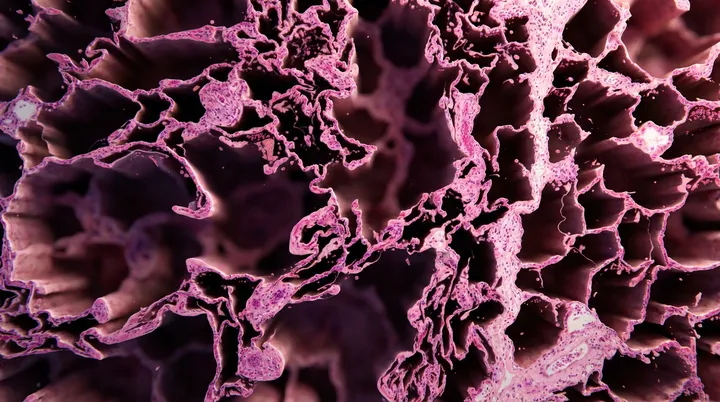
A lung artery affected by pulmonary hypertension, seen under the microscope, with a thickened inner layer in its wall

Microscope

The artery wall thickens and the opening narrows.

In pulmonary hypertension, the walls of the arteries in the lungs get thicker. As the small arteries narrow, the pressure goes up. In this artery, the intima, the wall’s innermost layer, has thickened.

Compare it with a healthy artery

Under the microscope

A small artery in the lung, healthy and with pulmonary hypertension.

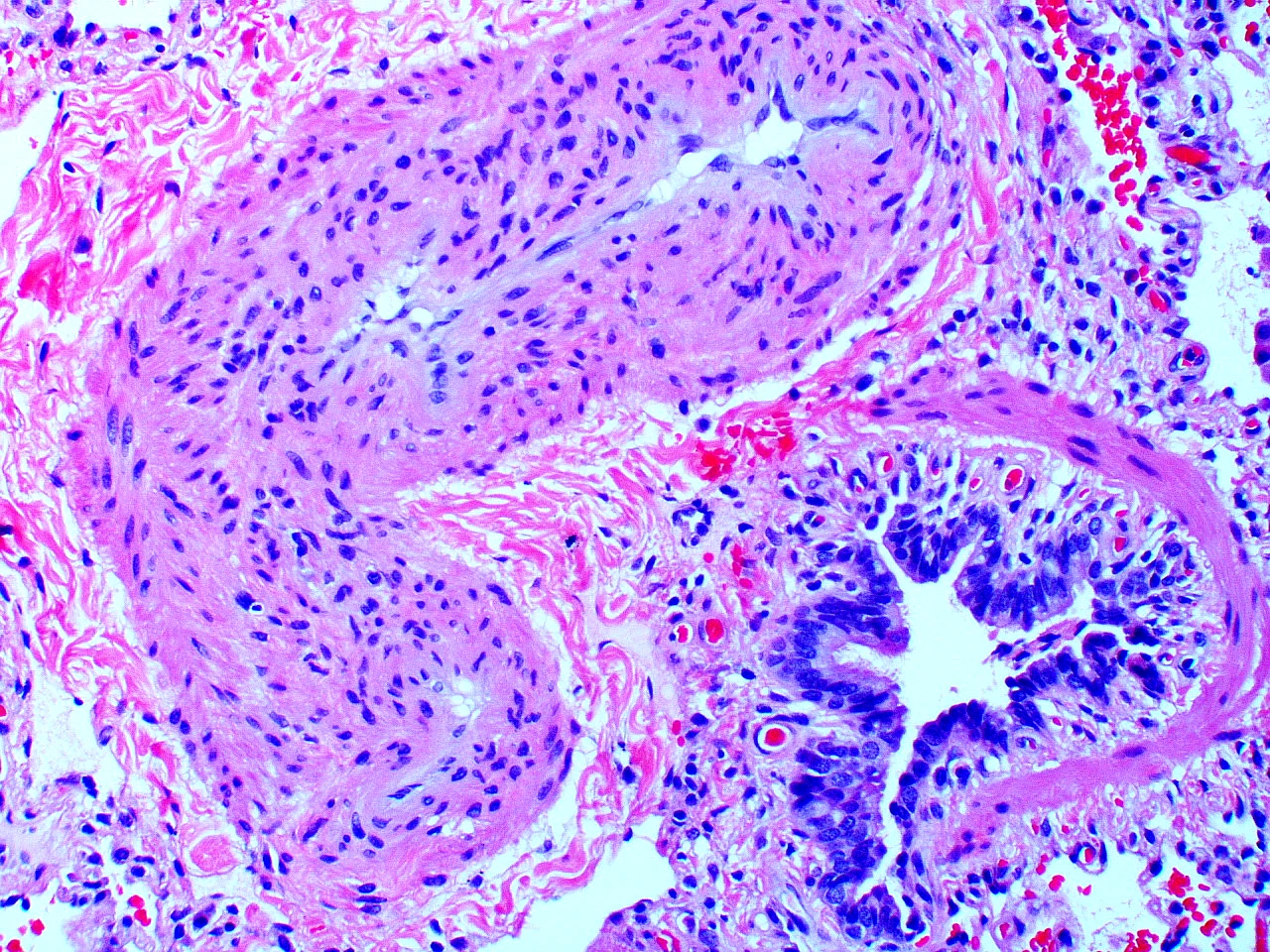
In pulmonary hypertension, the walls of the arteries in the lungs are remodeled and grow thicker. In the artery shown here, it’s mostly the muscle layer that has grown.

Healthy

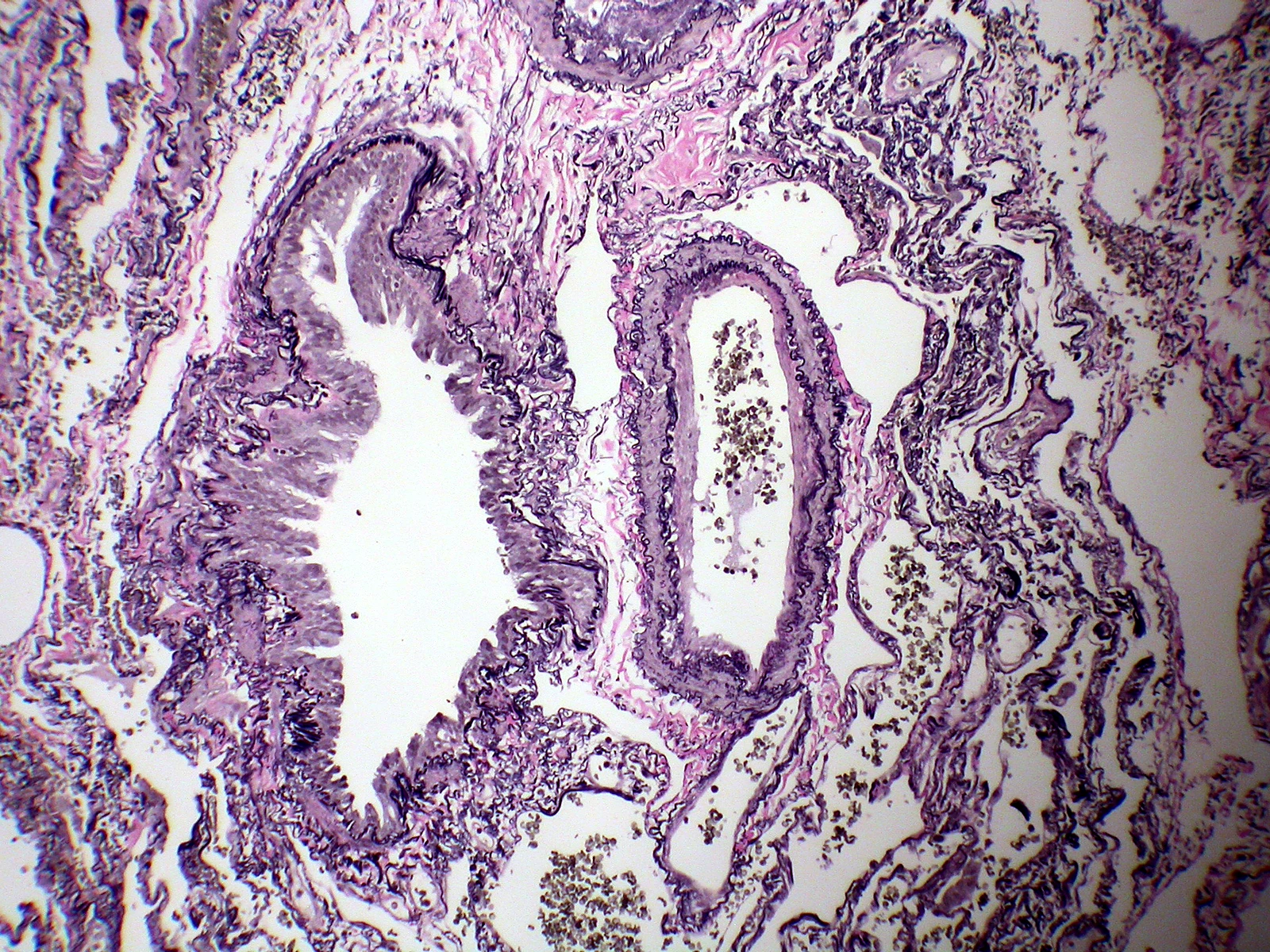
A normal muscular pulmonary artery next to a bronchiole, stained to show its elastic fibers: a thin wall and a wide openingWall
Healthy artery. Thin wall, wide opening. Elastin stain.

With pulmonary hypertension

A muscular pulmonary artery with pulmonary hypertension next to a bronchiole: the pink muscle layer takes up almost the entire wall, leaving the opening a narrow slitWall
Thickened artery. The muscle has almost closed off the opening. H&E stain.

The right side of the heart

The right side of the heart pushes against that pressure, and it wears out.

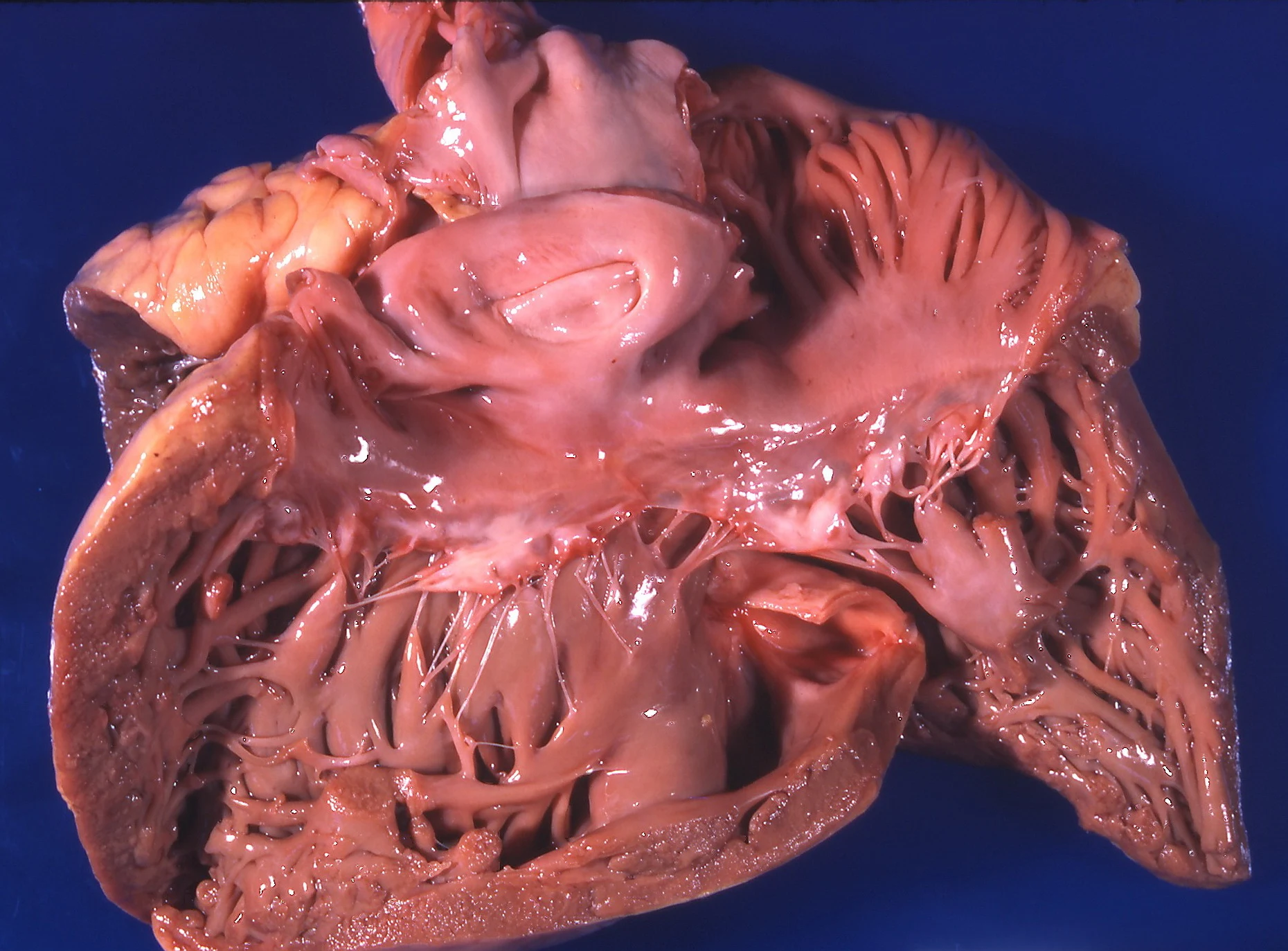
It has to work harder than normal. Over time it gets bigger and can fail. This is called right-sided heart failure, or cor pulmonale.

A heart from an autopsy, with the wall of the right ventricle thickened by cor pulmonale
A heart with cor pulmonale: the wall of the right ventricle is thickened.
What narrows these arteries?

Pulmonary hypertension isn’t a single disease. Doctors sort it into five groups. Causes include a failing left side of the heart, chronic lung diseases, blood clots in the lungs, and sleep apnea.

Drugs and medicines

Some street drugs and medicines can raise the risk. Methamphetamine is one of them. Pulmonary hypertension develops in a minority of people who use it, but if you’ve used it, tell your doctor. Knowing that helps them find the cause.

What you can control

If you get short of breath doing things you used to handle just fine, bring it up with your doctor.

It’s often the first symptom. Pulmonary hypertension is often mistaken for other conditions. Share your health history: it helps your doctor find the cause.

A risk you can control

Don’t smoke, and don’t use drugs.

Smoking and illegal drugs raise the risk of pulmonary hypertension.

I’m your friend, Dr. Carlo De la Sancha. Health and Science for all.

Keep learning

What happens when a blood clot blocks an artery in the lung?

Catherine O’Hara did not die from cancer .. she died from thisWatch “Catherine O’Hara didn’t die of cancer. She died of this”
Medical transparencySources, images, and licenses

Where the information comes from

Images

The opening microscope image is a version of the cited micrograph with more depth and contrast. The two arteries in the comparison were only adjusted for contrast, color, and sharpness, using code. Both are muscular pulmonary arteries next to a bronchiole, from the same atlas. The healthy one is stained for elastic fibers and shown zoomed in on the artery. The thickened one has the routine stain (hematoxylin and eosin), though the author doesn’t name it. No openly licensed image of a healthy artery with the same stain and magnification could be found.

Educational content for the general public. It doesn’t diagnose pulmonary hypertension or replace a visit with your doctor. Diagnosis and treatment depend on testing and on an evaluation by your health care team.

Know someone who would find this helpful?

Share it with them.