YOUR BODY · SLIDE BY SLIDE

It looked like an armpit abscess. It was lymphoma

A teenager, antibiotics that didn't work, and what the pathologist saw.
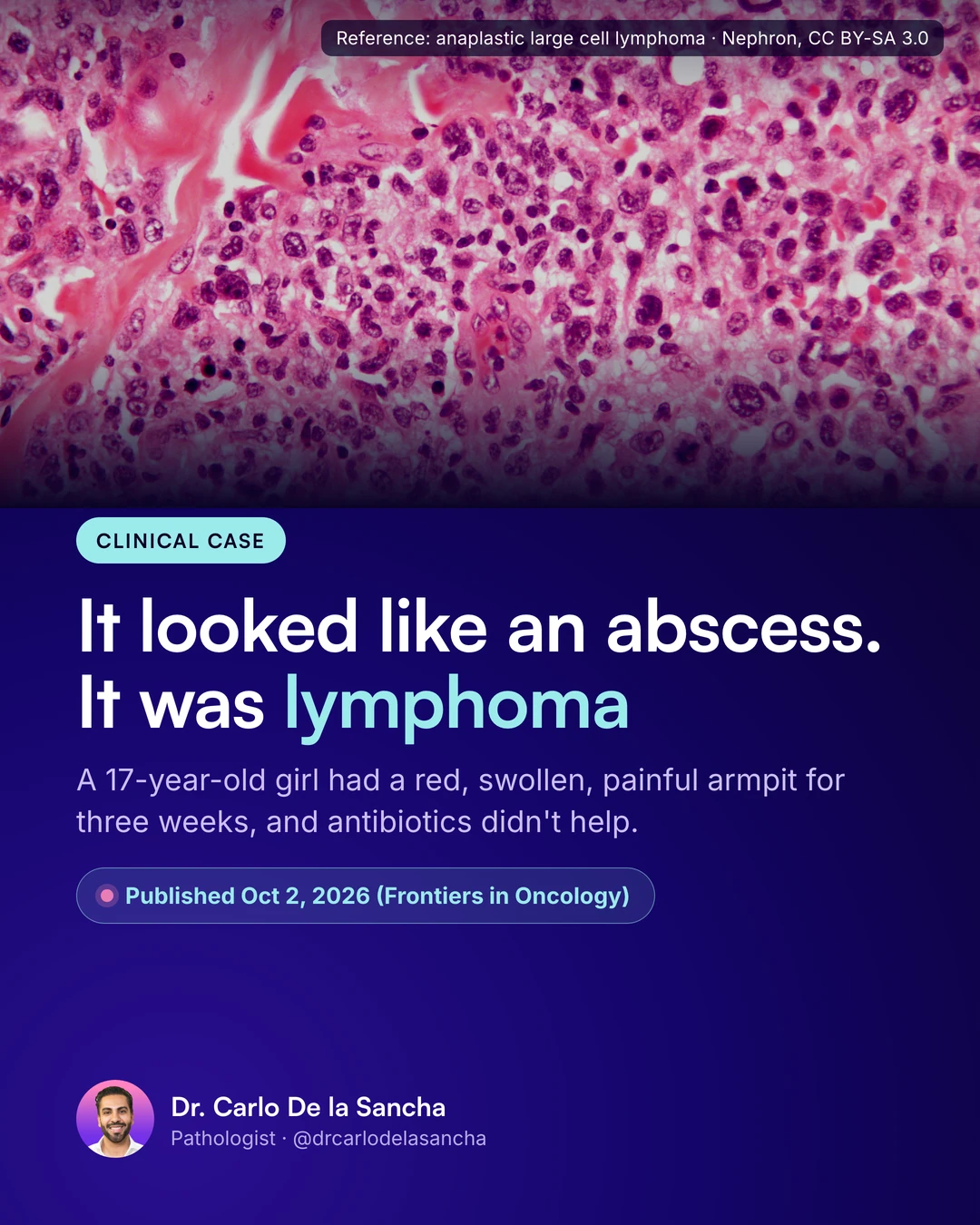
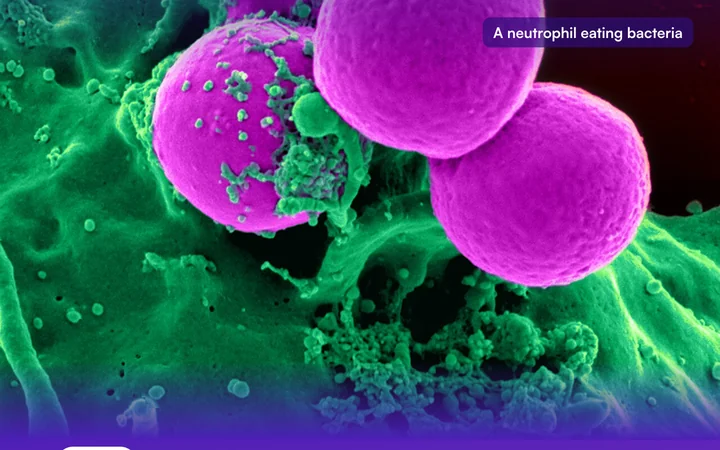
  • Reference: anaplastic large cell lymphoma · Nephron, CC BY-SA 3.0. Clinical case. It looked like an abscess. It was lymphoma. A 17-year-old girl had a red, swollen, painful armpit for three weeks, and antibiotics didn't help. Published Oct 2, 2026 (Frontiers in Oncology) Dr. Carlo De la Sancha. Pathologist · @drcarlodelasancha
  • What happened. They operated to drain pus, and there was hardly any. For three weeks, her left armpit had been red, swollen, and more and more painful. At another hospital she got IV antibiotics, and it kept growing anyway. She arrived with a fever and an inflamed area of about 18 by 18 cm (7 by 7 inches), from her armpit to her chest and arm. The ultrasound suggested an abscess (a pocket of pus), so she had surgery that same day to drain it. Very little pus came out. Almost the whole cavity was filled with solid, nodular tissue that crumbled when touched. The surgeons sent it to pathology. Dr. Carlo De la Sancha. Pathologist · @drcarlodelasancha
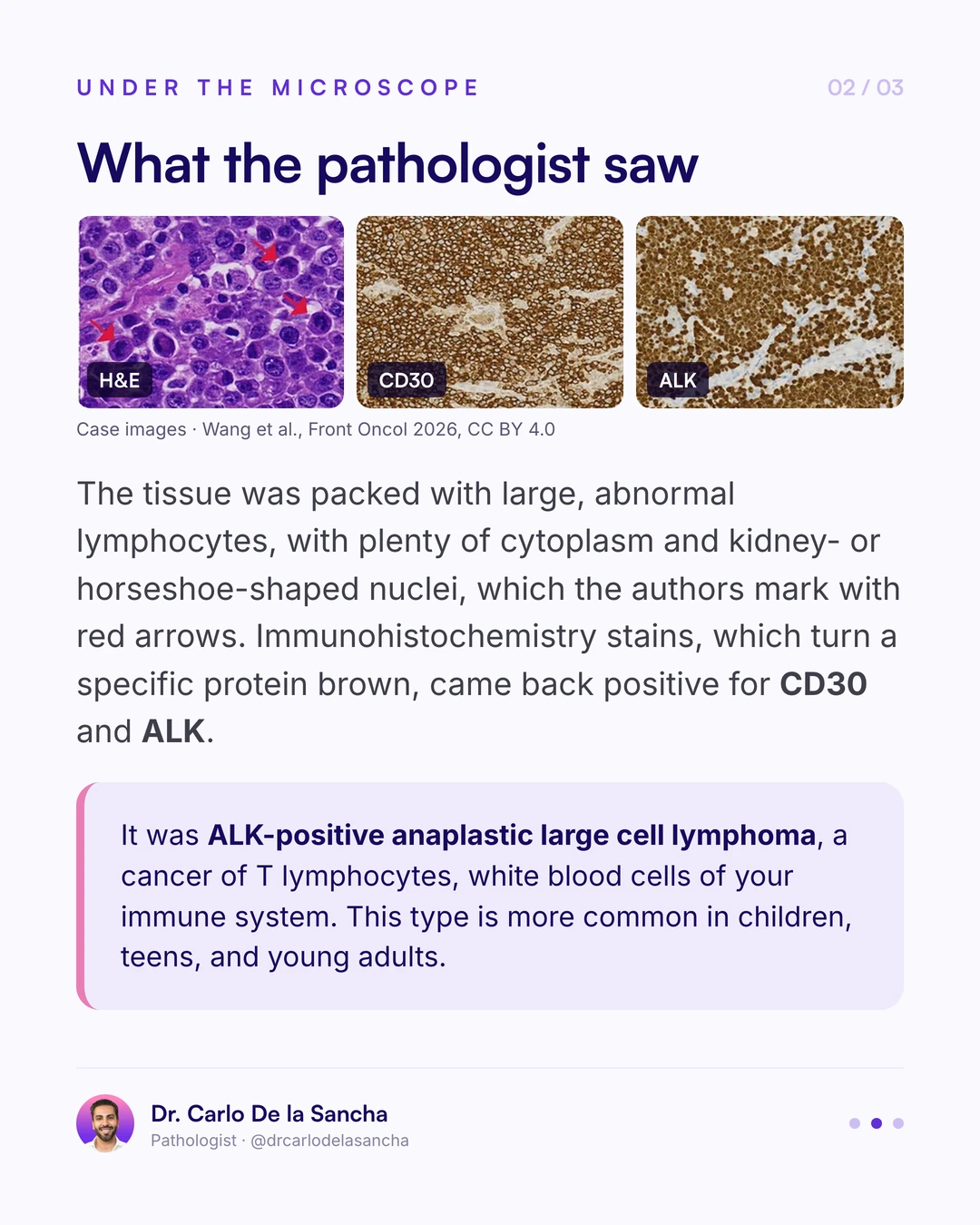
  • Under the microscope. What the pathologist saw. H&E. CD30. ALK. Case images · Wang et al., Front Oncol 2026, CC BY 4.0. The tissue was packed with large, abnormal lymphocytes, with plenty of cytoplasm and kidney- or horseshoe-shaped nuclei, which the authors mark with red arrows. Immunohistochemistry stains, which turn a specific protein brown, came back positive for CD30 and ALK. It was ALK-positive anaplastic large cell lymphoma, a cancer of T lymphocytes, white blood cells of your immune system. This type is more common in children, teens, and young adults. Dr. Carlo De la Sancha. Pathologist · @drcarlodelasancha
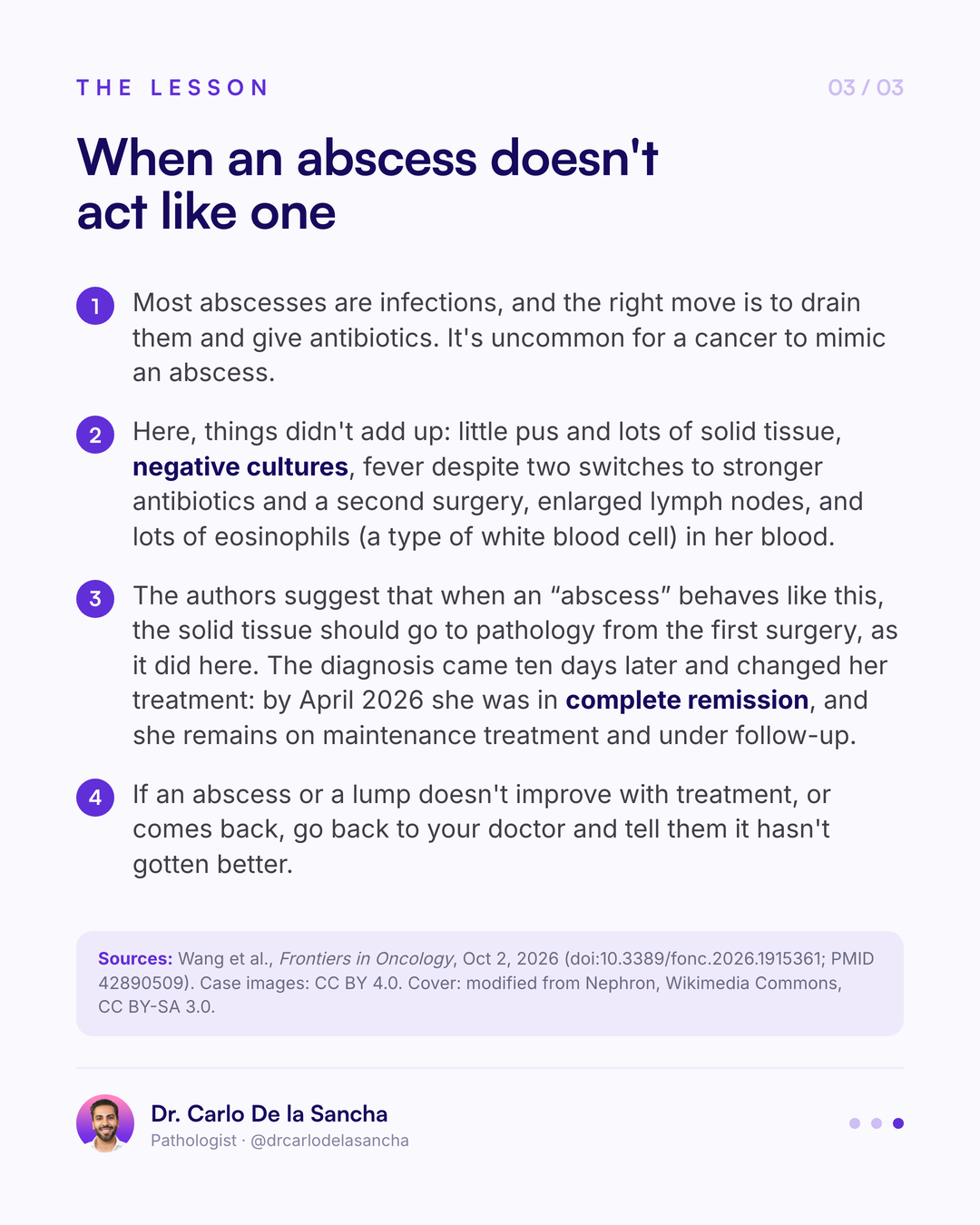
  • The lesson. When an abscess doesn't act like one. Most abscesses are infections, and the right move is to drain them and give antibiotics. It's uncommon for a cancer to mimic an abscess. Here, things didn't add up: little pus and lots of solid tissue, negative cultures, fever despite two switches to stronger antibiotics and a second surgery, enlarged lymph nodes, and lots of eosinophils (a type of white blood cell) in her blood. The authors suggest that when an “abscess” behaves like this, the solid tissue should go to pathology from the first surgery, as it did here. The diagnosis came ten days later and changed her treatment: by April 2026 she was in complete remission, and she remains on maintenance treatment and under follow-up. If an abscess or a lump doesn't improve with treatment, or comes back, go back to your doctor and tell them it hasn't gotten better. Sources: Wang et al., Frontiers in Oncology, Oct 2, 2026 (doi:10.3389/fonc.2026.1915361; PMID 42890509). Case images: CC BY 4.0. Cover: modified from Nephron, Wikimedia Commons, CC BY-SA 3.0. Dr. Carlo De la Sancha. Pathologist · @drcarlodelasancha
  • Want to understand your body? Subscribe to my newsletter: drcarlodelasancha.com/en/newsletter. Save it, share it and follow me → @drcarlodelasancha. Educational content. Not a substitute for a visit to your doctor.

Know someone who would find this helpful?

Share it with them.