


All Núcleo courses

Núcleo

Health sciences

Kickstart

Get ready to start your health professions program on solid ground.

Lesson 0 + 12 cases12 to 15 minutes each

Join the waitlist
  • You’ve been accepted into a health professions program (medicine, nursing, dentistry, nutrition, psychology, veterinary medicine…), or you’re about to start one, and you want to begin on the right foot.

Have you ever wondered…?

  1. Why does anesthesia fail in an abscess?

  2. Why do your feet swell on a long flight?

  3. Why do you shiver when a fever starts and sweat when it breaks?

  4. Why are you still panting after you’ve stopped climbing the stairs?

Behind each one is a big idea from the first year of your program.

Start your program knowing how to think, not just how to memorize.

You’ll use everything you have: your logic, what you already know and your intuition. In each case you put together pieces from several sciences, the way you do to reach a diagnosis, and you train your clinical judgment. You reach the conclusion yourself, and that’s how you really learn it: you don’t memorize it, you understand it.

How each lesson works

  1. The case

    Something that doesn’t add up, and your bet. “I don’t know yet” is a fine answer.

  2. The pieces

    Each from a different science. At the end of each one, you predict what comes next.

  3. You build the chain

    You put the pieces in order before I tell you.

  4. The conclusion

    We tie it all together, and I show you which sciences you used.

  5. A new case

    You solve it yourself, with up to two hints.

  6. Clinical judgment

    What the lesson trains you to decide, and which professions work with it.

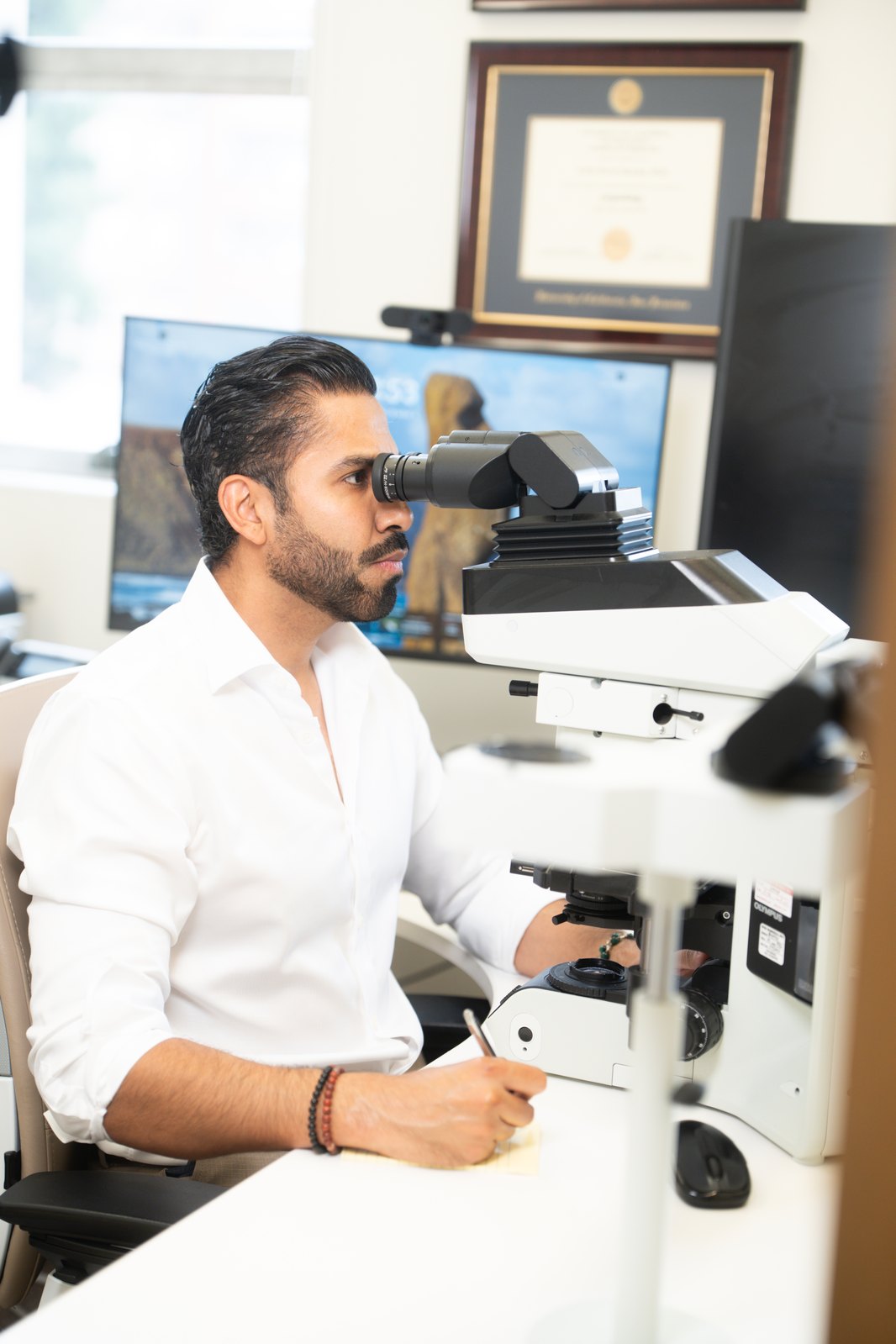
Dr. Carlo De la Sancha writing while he looks through his microscope.

Who explains it

On the other side of the microscope, there’s me.

I’m a pathologist. My job isn’t just looking at cells and tissues: it’s understanding why and how the body gets sick. My whole training was about learning to reason through the mechanisms of disease, from the cell to the patient. It’s the way of thinking I want you to carry with you from your very first semester.

What people write to me when I explain this.

  • Learning this chain of events made me want to study biochemistry in college! As always, such an elegant way of teaching!

  • I’m not a doctor, but I stayed, paid attention, understood it, liked it and shared it. I hope it reaches lots and lots of people! Because this helps all of us.

  • Very clear, Doc. I’m a second-semester medical student, I still have a lot to learn, and even though I haven’t gotten to these topics yet, thank you for teaching us.

  • I learned more from this video than in my histology and pathology classes at school

  • Excellent explanation. If they’d taught me like this in college, I wouldn’t have cried for days before passing that course’s midterm

Real comments on my videos, translated from Spanish.

Explore the curriculum

One lesson on how to study, and twelve cases. Each one trains a specific clinical judgment.

  1. What do I study, and how much?How the brain learns

    The case

    Two students study for the same number of hours. One rereads and highlights; the other closes the book and quizzes themselves.

    Clinical judgment

    Telling apart what you know from what just sounds familiar.

  2. Why does anesthesia fail in an abscess?ChemistryCell biologyPhysiologyMicrobiology

    The case

    Same drug, same dose, and in the abscess it barely works.

    Clinical judgment

    Same drug and dose, different tissue: don’t settle for the first cause.

  3. Why do your feet swell on a long flight?PhysicsPhysiologyAnatomyBiochemistry

    The case

    Hours of sitting and doing nothing, and when you get off the plane your shoes don’t fit anymore.

    Clinical judgment

    One swollen leg that’s warm and painful is something else: it may be a clot, and that’s an emergency.

  4. Why do you shiver when a fever starts and sweat when it breaks?ImmunologyBiochemistryPhysiologyPharmacology

    The case

    You’re burning up inside, and you’re shivering with cold.

    Clinical judgment

    When the sun pushes the body to 106 °F, acetaminophen won’t help: you have to cool it down.

  5. The scareNeuroscienceEndocrinologyCell biologyPharmacology

    The case

    A dog lunges at you at night: your heart is pounding, you’re breathing fast, your pupils are wide and your mouth is dry.

    Clinical judgment

    Each organ responds according to its receptor: that’s why an inhaler can speed up the heart.

  6. Why are you still panting after you’ve stopped climbing the stairs?BiochemistryPhysiologyChemistry

    The case

    You’ve stopped, and you still can’t catch your breath.

    Clinical judgment

    The effect goes on after the cause has stopped.

  7. Blood typesGeneticsBiochemistryImmunologyPhysiology

    The case

    A bleeding trauma patient arrives, and there’s no time to find out their blood type. What blood do they get?

    Clinical judgment

    Who can give blood to whom is worked out, not memorized.

  8. Why does a scrape sting but barely bleed, while a cut bleeds right away?HistologyAnatomyPhysiologyCell biology

    The case

    The wound that stings more is the one that bleeds less.

    Clinical judgment

    The deeper burn can hurt less.

  9. How to read anatomy without memorizing it, and the language of medicineAnatomyHistologyThe language of medicine

    The case

    You bump your elbow and feel a jolt all the way down to your pinky.

    Clinical judgment

    Tingling at night in the thumb, index and middle fingers: the problem is in the wrist.

  10. The splinterMicrobiologyImmunologyAnatomyLaboratory medicine

    The case

    Red, warm and full of pus. On day three, a red streak creeping up, and a fever.

    Clinical judgment

    Redness and pus mean the defenses are winning; the red streak and the fever mean the infection is getting away.

  11. The dentist who spots bulimiaChemistryAnatomyPhysiologyPsychologyNutrition

    The case

    The enamel is worn away only on the inner side of the upper teeth.

    Clinical judgment

    The pattern of damage tells you where the acid came from, and who to refer the patient to.

  12. When acetaminophen harms the liverPharmacologyBiochemistryHistologyPhysiology

    The case

    “It’s mild,” so people take too much without realizing it, adding up cold and flu medicines that also contain it.

    Clinical judgment

    Over-the-counter doesn’t mean harmless, and on the first day you feel fine.

  13. Wrap-up: how to think through a diseaseEvery science in the course

    The case

    A two-year-old with two days of diarrhea, listless, with a dry mouth and no wet diapers.

    Clinical judgment

    The warning signs in a dehydrated child, and why oral rehydration solution works.

Try a sample

Here’s how lesson 1 begins.

The case

Lesson 1

Why does anesthesia fail in an abscess?

The dentist gives two people the same anesthetic, at the same dose. One goes numb within minutes. For the other, who has an abscess full of pus, it barely works.

Your bet
Why does it barely work in the abscess?
Piece 1In the course, I walk you through it on video, step by step
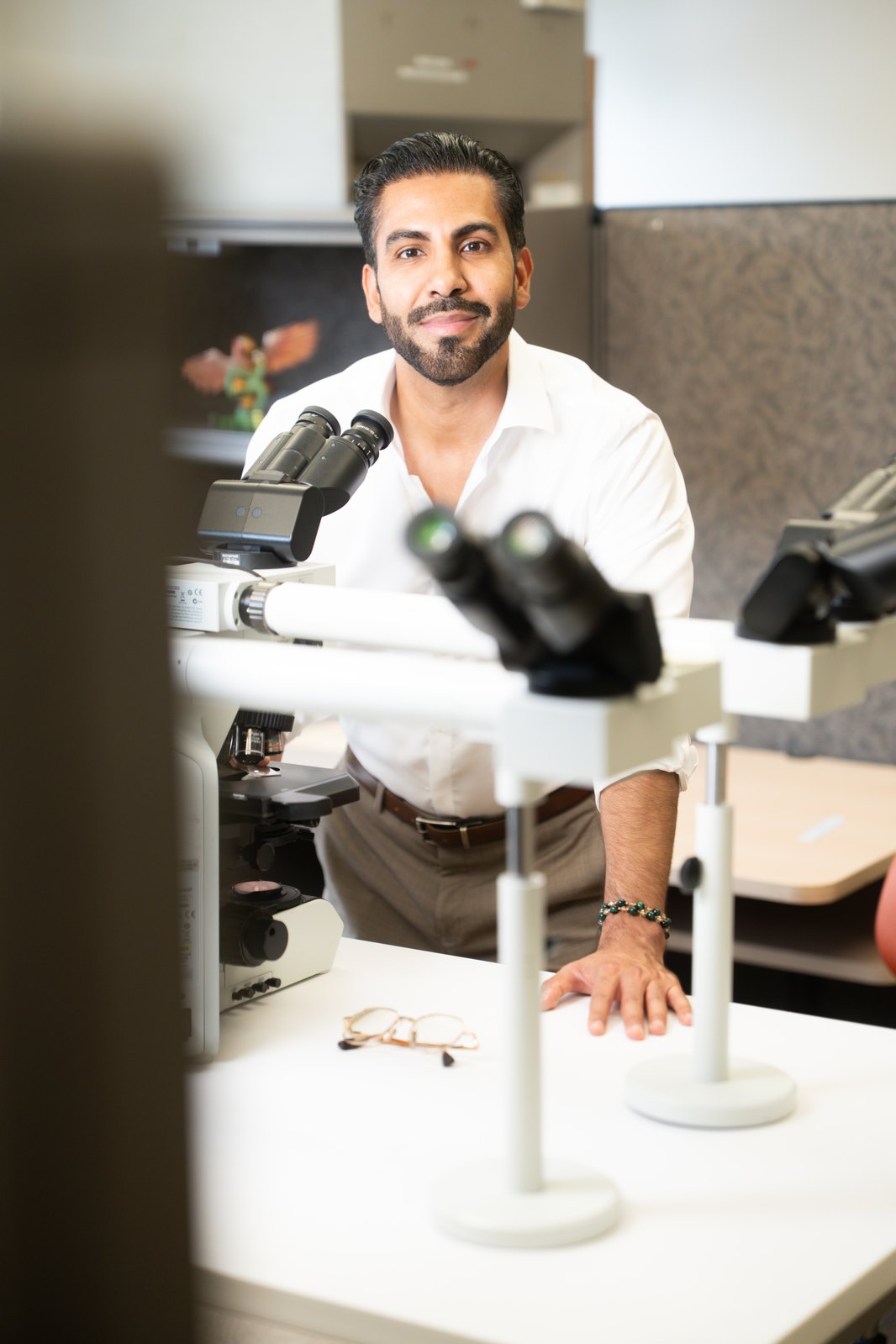
Dr. Carlo De la Sancha standing and smiling next to a microscope.

The pieces

  1. Piece 1 of 4Chemistry

    Lidocaine comes in two forms: charged and uncharged. The more acidic the tissue around it, the more molecules take the charged form.

  2. Piece 2 of 4Cell biology

    The nerve’s fatty layer

    in the course

  3. Piece 3 of 4Physiology

    Where pain gets switched off

    in the course

  4. Piece 4 of 4Microbiology

    Why pus is acidic

    in the course

Clinical judgment

When you connect all four, you understand why the dentist injects away from the abscess, and you learn something you’ll use your whole career: don’t settle for the first cause.
When you finish, you’ll be able to:

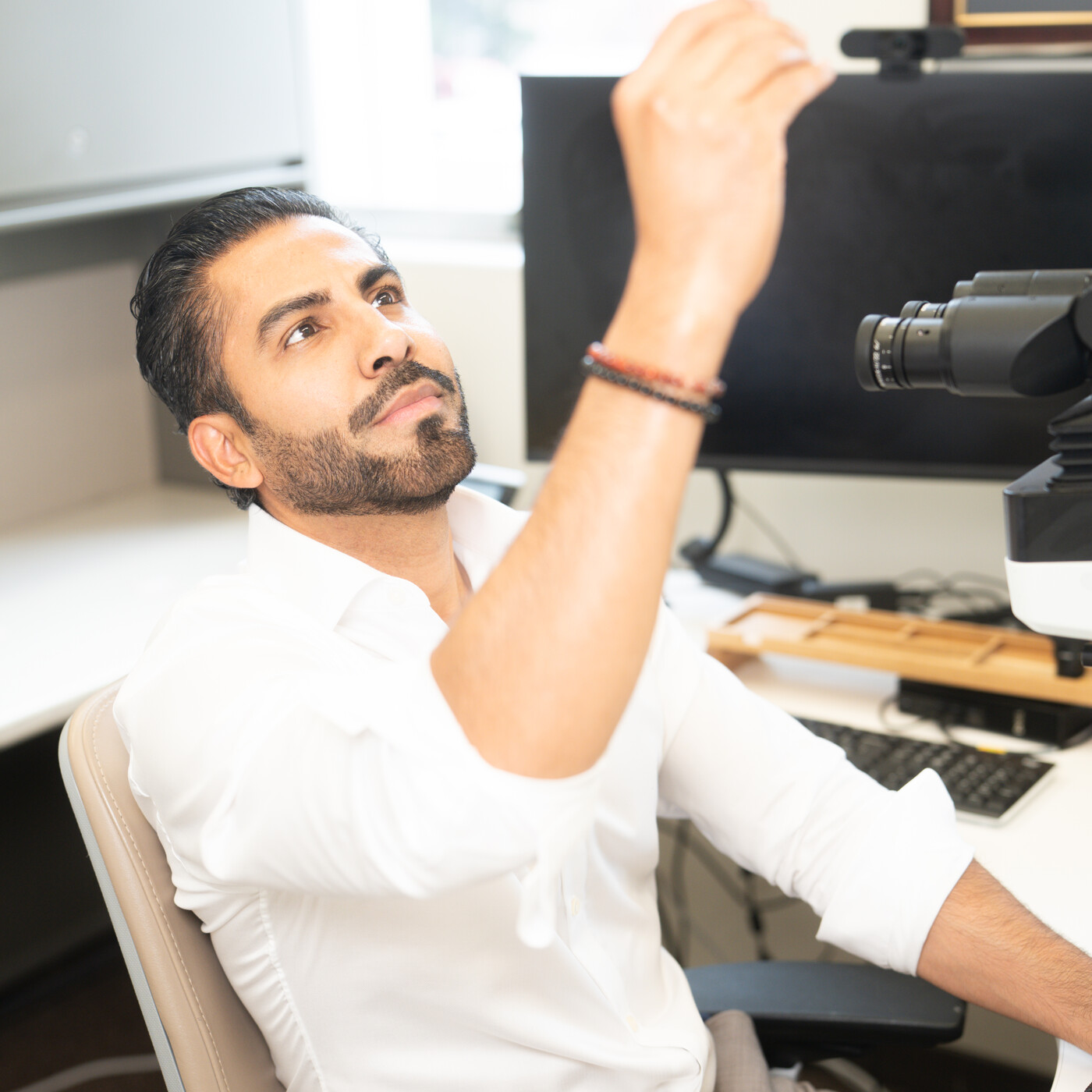
Dr. Carlo De la Sancha examining a tissue slide.
  • Study with techniques that actually work, starting in your first week.
  • Recognize the big ideas of first year: the membrane, pressure, energy, tissues, the body’s defenses.
  • Bring chemistry, physiology, anatomy and microbiology together in a single case.
  • Read anatomy through its logic, and medical terms through their roots.
  • Practice clinical judgment: telling what can wait from what’s an emergency.

Get on the waitlist

You’ll get an email to confirm. If you don’t see it, check Promotions and click “Confirm and join the list”: without that click you’re not on the list.

I'll email you when the course for your stage opens and, at most once a month, what's new to study, plus the Understand Your Body newsletter every two weeks. You can unsubscribe with one click.

Questions

  • Which programs is it for?

    Medicine, nursing, dentistry, nutrition, psychology, veterinary medicine and every other health profession.

  • Do I need to take Discover first?

    No. Discover is for deciding whether health care is for you; Kickstart is for when you’ve already started.

  • When does it open?

    There’s no date yet. If you join the waitlist, I’ll write to you the day it opens.

Start your first semester on solid ground.

The idea is that your first semester doesn’t catch you off guard.

Join the waitlist

Know someone who would find this helpful?

Share it with them.