


All Núcleo courses

Núcleo

Health sciences

Discover

Find out whether a career in health is right for you, or learn how the body works just because you’re curious.

Join the waitlist
  • A career in health is calling you, and you want to know if it’s really for you before you decide.
  • It’s also for you if you’re outside the field and want to truly understand how the body works and how it gets sick.
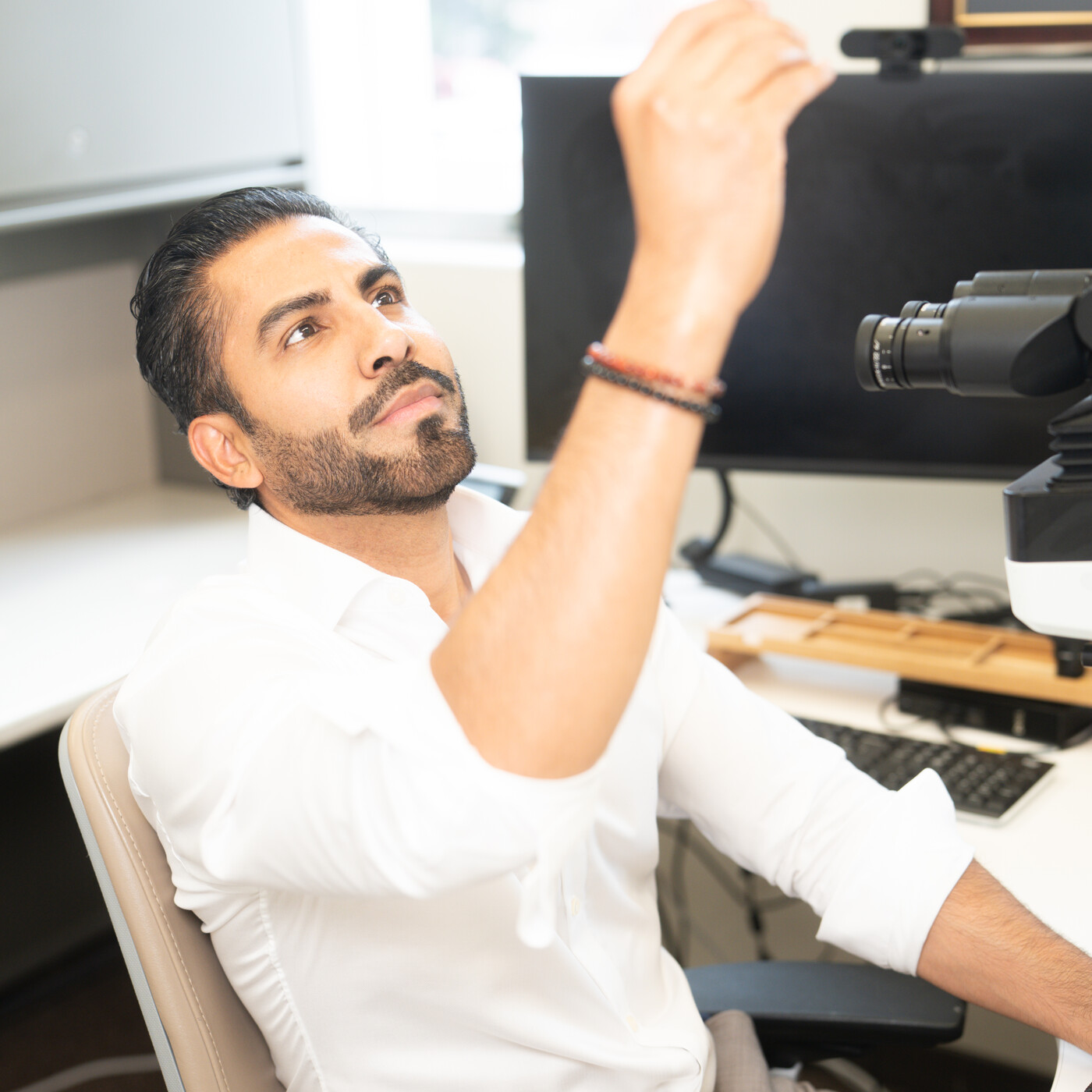
Dr. Carlo De la Sancha next to his microscope.

Have you ever wondered…?

  1. Why does mucus turn green?

  2. Why can a heart attack hurt in your left arm?

  3. Why does diabetes make you so thirsty?

  4. How can cancer grow without you feeling it?

None of them has a one-fact answer. Each is a chain that runs from your cells to what you feel.In Discover, you put it together.

You won’t be memorizing isolated facts.

You’ll use everything you have: your logic, what you already know and your intuition. Each piece comes from a different science, and they only make sense together. You reach the conclusion yourself, and that’s how you really learn it: you don’t memorize it, you understand it.

How each lesson works

  1. The case

    Something that doesn’t add up, and your bet. “I don’t know yet” is a fine answer.

  2. The pieces

    Three or four, each from a different science. At the end of each one, you predict what comes next.

  3. You build the chain

    You put the pieces in order before I tell you.

  4. The conclusion

    We tie it all together, and I show you which sciences you used to solve it.

  5. A new case

    You solve it yourself, with up to two hints.

  6. Who works on this

    The health professions that deal with it in real life.

Dr. Carlo De la Sancha examining a tissue slide.

Who explains it

On the other side of the microscope, there’s me.

I’m a pathologist. My job isn’t just looking at cells and tissues: it’s understanding why and how the body gets sick. My whole training was about learning to reason through the mechanisms of disease, from the cell to the patient. That’s what I teach you here: to think about the body that way.

What people write to me when I explain this.

  • Learning this chain of events made me want to study biochemistry in college! As always, such an elegant way of teaching!

  • I’m not a doctor, but I stayed, paid attention, understood it, liked it and shared it. I hope it reaches lots and lots of people! Because this helps all of us.

  • Very clear, Doc. I’m a second-semester medical student, I still have a lot to learn, and even though I haven’t gotten to these topics yet, thank you for teaching us.

  • I learned more from this video than in my histology and pathology classes at school

  • Excellent explanation. If they’d taught me like this in college, I wouldn’t have cried for days before passing that course’s midterm

Real comments on my videos, translated from Spanish.

The cases you’ll solve

Cases you crack by putting together pieces from several sciences.

  1. The color that lies

    The case

    Green mucus. On day three of a cold it comes out green, and someone tells you: “That’s an infection now. Take an antibiotic.” Does green really mean bacteria?

    The pieces

    • Cell biology
    • Immunology
    • Biochemistry
    • Microbiology
  2. The map that saved a neighborhood

    The case

    In London, hundreds die in just a few days. A doctor marks every death in the neighborhood on a map, and they all point to one water pump. How can diarrhea kill?

    The pieces

    • Microbiology
    • Physiology
    • Chemistry
    • Public health
  3. The hands that never got sick

    The case

    The milkmaids and smallpox. Women who caught cowpox didn’t get human smallpox, which killed millions. What was different about their defenses?

    The pieces

    • Microbiology
    • Immunology
    • Public health
  4. The boy who couldn’t wait

    The case

    Sweet urine. A 14-year-old boy was dying of diabetes: he ate a lot, was thirsty all the time and kept losing weight, until he received the first insulin. Why was he losing weight if he ate so much?

    The pieces

    • Biochemistry
    • Physiology
    • Endocrinology
  5. What he needed to breathe

    The case

    A baby was born early and, with the best medicine of his time, died two days later because he couldn’t breathe. What was missing from his lungs?

    The pieces

    • Anatomy
    • Physics
    • Biochemistry
    • Pharmacology
  6. What grandmothers knew

    The case

    The corn that protected Mexico. In the American South, people who ate almost nothing but corn got pellagra; in Mexico, people who ate corn didn’t. What did they do differently when they prepared it?

    The pieces

    • Nutrition
    • Chemistry
    • Biochemistry
    • Physiology
  7. The enemy you can’t smell

    The case

    The heater in winter. A family goes to sleep with the heater on and never wakes up. There was no smoke and no smell. What happened in their blood?

    The pieces

    • Chemistry
    • Biochemistry
    • Physiology
  8. The pain in the wrong place

    The case

    The heart attack you feel in your arm. The problem is in the heart, but the pain shows up in the left arm. Why does the brain get the location wrong?

    The pieces

    • Pathology
    • Physiology
    • Neuroanatomy
  9. The man who was no longer himself

    The case

    A railroad foreman. An iron rod went through his head and he survived, but his friends said he was no longer the same man. Where does personality live?

    The pieces

    • Anatomy
    • Neuroscience
    • Psychology
  10. The queen’s legacy

    The case

    The boy’s blood. He would bleed for days from a simple bump, and the disease came from his great-grandmother, who never had it herself. Why does it almost always strike males?

    The pieces

    • Genetics
    • Physiology
    • Biochemistry
  11. What space takes from the body

    The case

    Astronauts who spend months on the space station come back with weaker bones. Why is bone lost when it doesn’t carry weight?

    The pieces

    • Cell biology
    • Physics
    • Physiology
    • Endocrinology
  12. Help from a horse

    The case

    The scorpion and the horse serum. A scorpion sting can be serious, especially in children, and the antivenom is made with help from horses. How can a horse save your life?

    The pieces

    • Toxicology
    • Physiology
    • Immunology
    • Biotechnology
  13. Wrap-up: ten silent years

    The case

    The polyp that takes ten years. Colon cancer starts as a polyp that grows quietly for years. Why does that give us time to catch it?

    The pieces

    • Histology
    • Cell biology
    • Genetics
    • Pathology

Try a sample

Here’s how lesson 1 begins.

The case

Lesson 1

The color that lies

Day three of a cold. You blow your nose and it’s green. Someone at home tells you: “That’s an infection now. Take an antibiotic.”

Your bet

What do you think is going on?
Piece 1In the course, I walk you through it on video, step by step
Dr. Carlo De la Sancha smiling next to his microscope.

The pieces

  1. Piece 1 of 4Cell biology

    Mucus is made by cells in your nose to trap whatever comes in: dust, viruses, bacteria.

  2. Piece 2 of 4Immunology

    Who shows up to clean it out

    in the course

  3. Piece 3 of 4Biochemistry

    Where the green comes from

    in the course

  4. Piece 4 of 4Microbiology

    When it really is bacteria

    in the course

The conclusion

When you connect all four, you understand why the color can’t tell you whether it’s bacteria.

When you finish, you’ll be able to:

  • Explain in your own words what happens in the body in famous cases.
  • Put together pieces from several sciences to reach a conclusion.
  • Recognize which sciences you used in each case.
  • Know which health professions work with each topic.
  • Decide, with better information, whether a career in health is for you.

Get on the waitlist

Pick the one that fits you, and you’ll get the right update.

I’m wondering whether a career in health (medicine, nursing, dentistry, nutrition...) is for me

You’ll get an email to confirm. If you don’t see it, check Promotions and click “Confirm and join the list”: without that click you’re not on the list.

I'll email you when the course for your stage opens and, at most once a month, what's new to study, plus the Understand Your Body newsletter every two weeks. You can unsubscribe with one click.

I already study or work in another health field (nursing, dentistry, nutrition, psychology, veterinary medicine...)

You’ll get an email to confirm. If you don’t see it, check Promotions and click “Confirm and join the list”: without that click you’re not on the list.

I'll email you when the course for your stage opens and, at most once a month, what's new to study, plus the Understand Your Body newsletter every two weeks. You can unsubscribe with one click.

I’m not in health care, but I want to really understand the body

You’ll get an email to confirm. If you don’t see it, check Promotions and click “Confirm and join the list”: without that click you’re not on the list.

I'll email you when the course for your stage opens and, at most once a month, what's new to study, plus the Understand Your Body newsletter every two weeks. You can unsubscribe with one click.

Questions

  • Do I need to know biology or chemistry?

    No. We start from what everyone already knows, and every piece is explained with examples and images.

  • Is it useful if I’m not going into health care?

    Yes. It’s also for anyone who wants to truly understand how the body works and how it gets sick.

  • When does it open?

    There’s no date yet. If you join the waitlist, I’ll write to you the day it opens.

  • What comes after Discover?

    Next comes Kickstart, for when you’ve already been accepted into a health professions program.

It’s not isolated facts: it’s learning to connect the pieces.

If you make it to the end, that says something about you: you can bring together what happens in the human body.

Join the waitlist

Know someone who would find this helpful?

Share it with them.