
YOUR BODY · SLIDE BY SLIDE

The green in your mucus comes from your defenses

How your white blood cells make it green, in four steps.

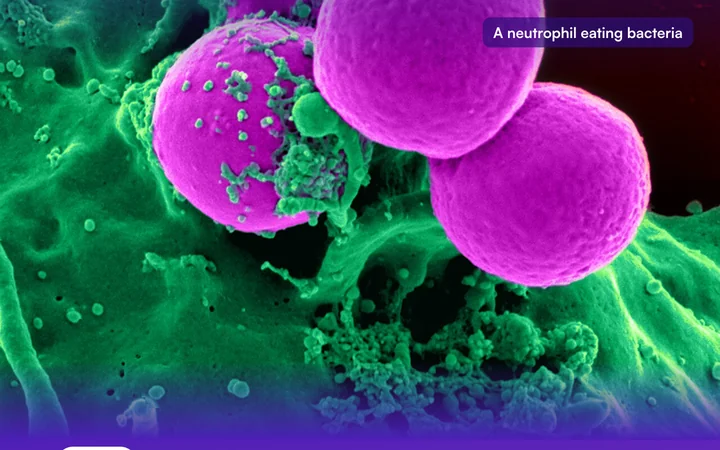
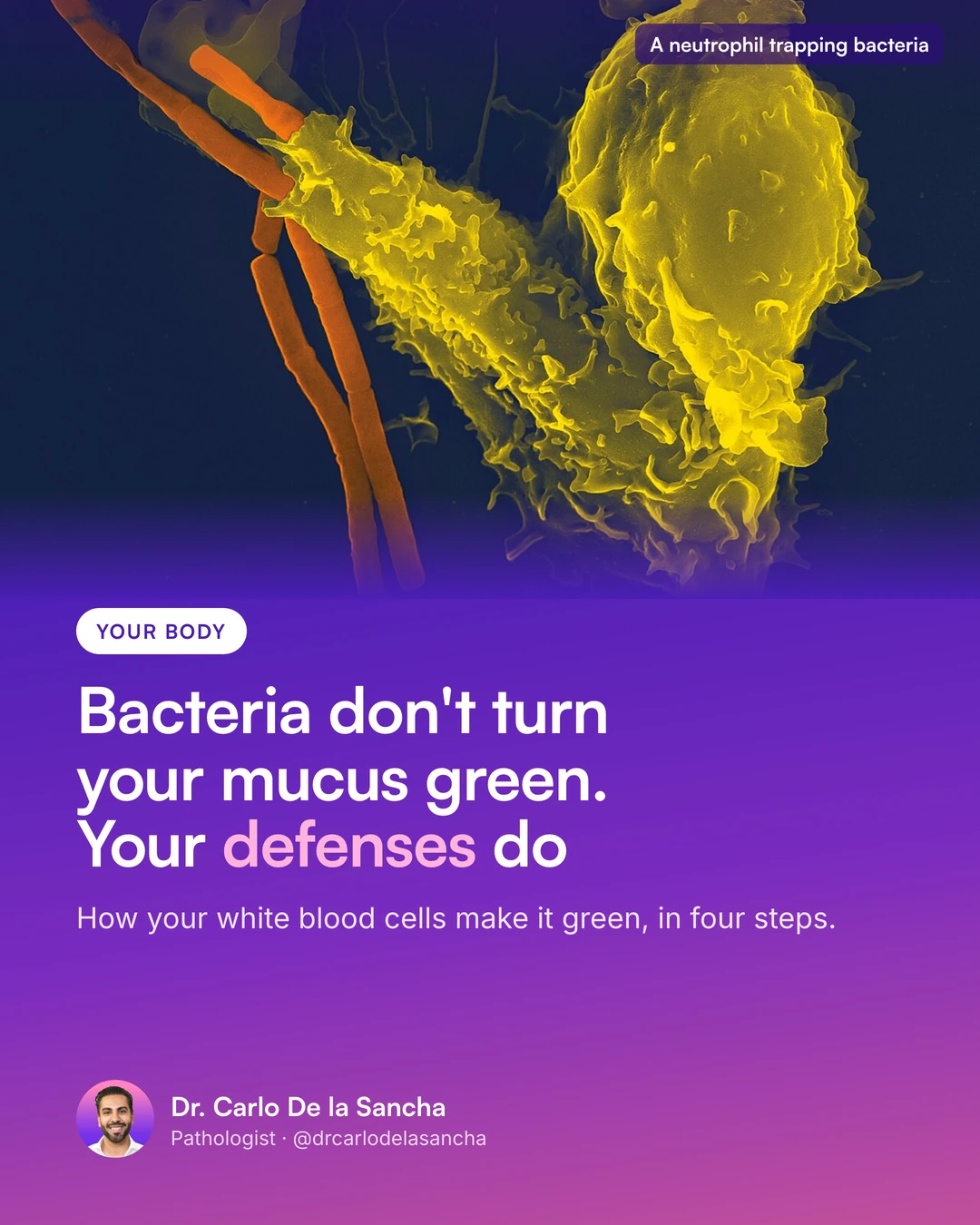
  • A neutrophil trapping bacteria Your body Bacteria don't turn your mucus green. Your defenses do How your white blood cells make it green, in four steps. Dr. Carlo De la Sancha Pathologist · @drcarlodelasancha
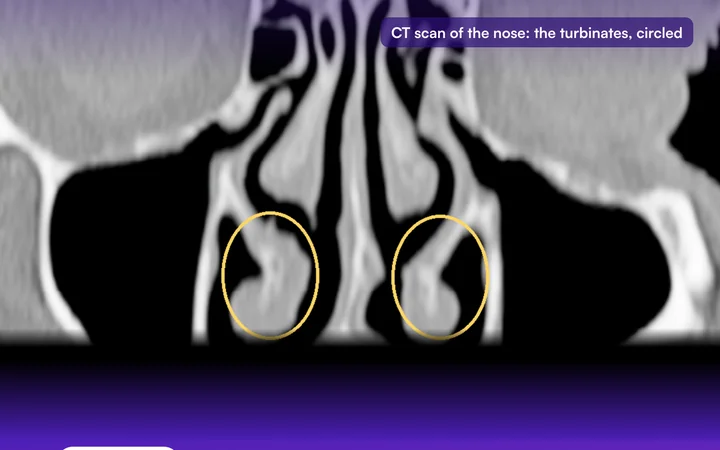
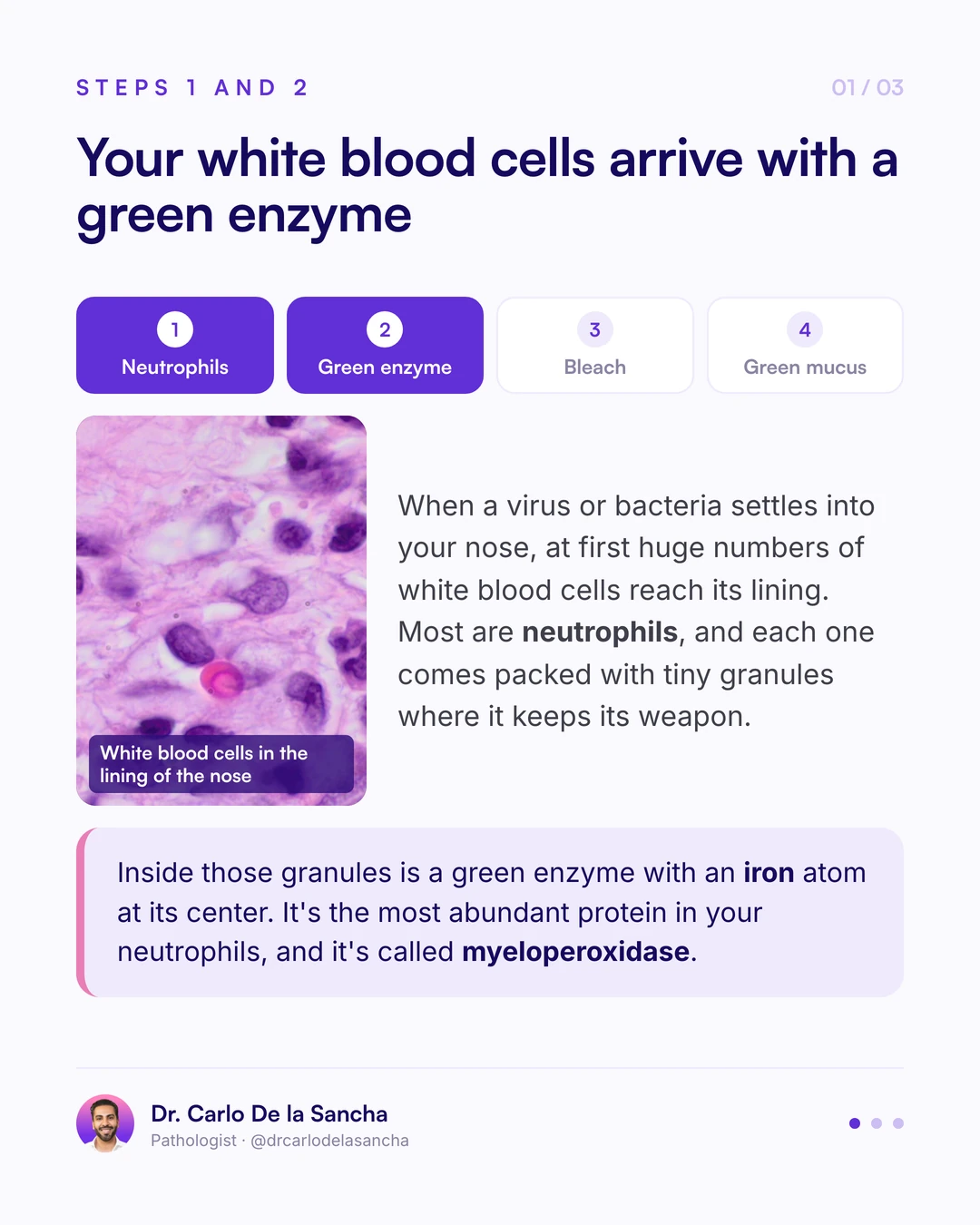
  • Steps 1 and 2 01 / 03 Your white blood cells arrive with a green enzyme Neutrophils Green enzyme Bleach Green mucus White blood cells in the lining of the nose When a virus or bacteria settles into your nose, at first huge numbers of white blood cells reach its lining. Most are neutrophils, and each one comes packed with tiny granules where it keeps its weapon. Inside those granules is a green enzyme with an iron atom at its center. It's the most abundant protein in your neutrophils, and it's called myeloperoxidase. Dr. Carlo De la Sancha Pathologist · @drcarlodelasancha
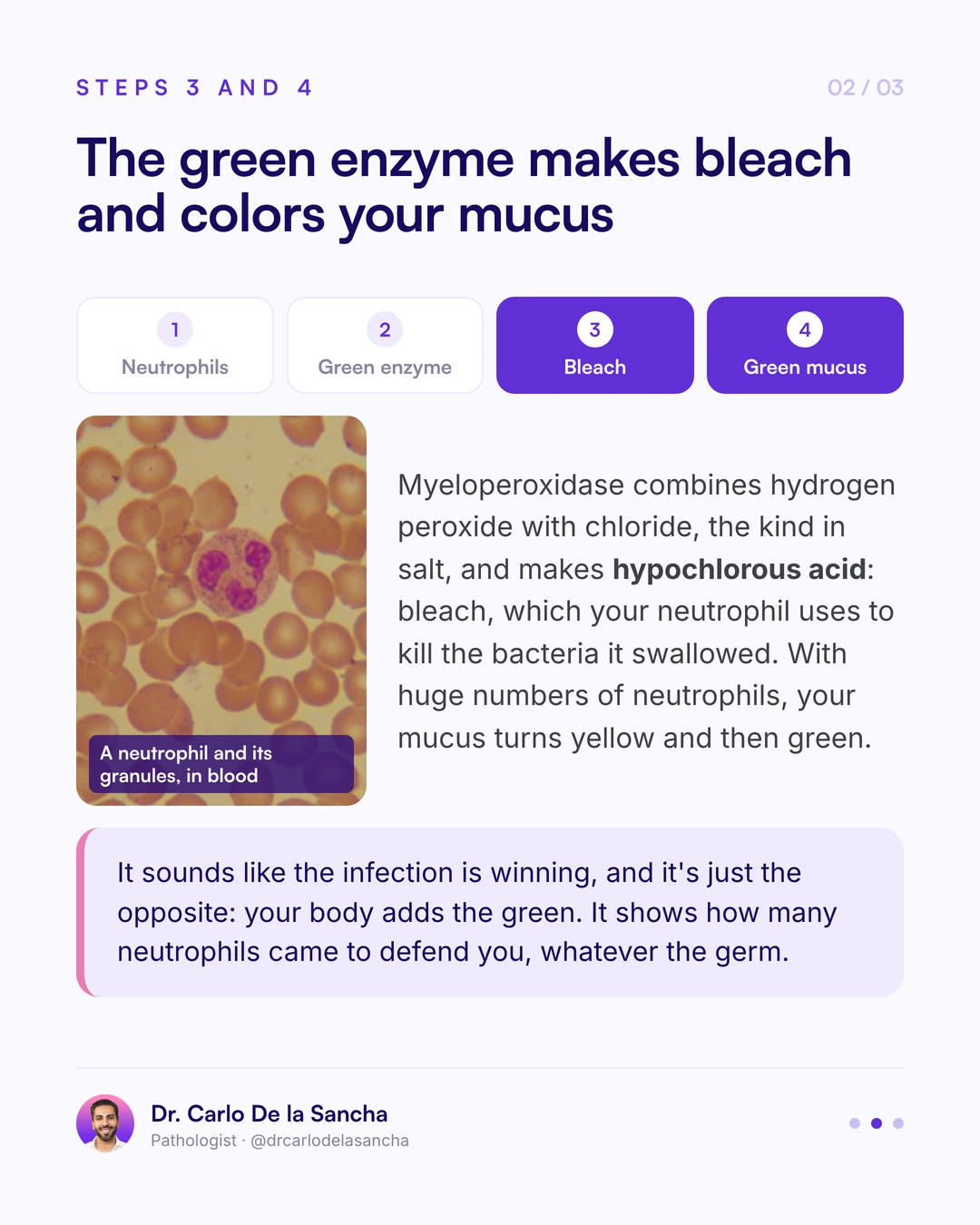
  • Steps 3 and 4 02 / 03 The green enzyme makes bleach and colors your mucus Neutrophils Green enzyme Bleach Green mucus A neutrophil and its granules, in blood Myeloperoxidase combines hydrogen peroxide with chloride, the kind in salt, and makes hypochlorous acid: bleach, which your neutrophil uses to kill the bacteria it swallowed. With huge numbers of neutrophils, your mucus turns yellow and then green. It sounds like the infection is winning, and it's just the opposite: your body adds the green. It shows how many neutrophils came to defend you, whatever the germ. Dr. Carlo De la Sancha Pathologist · @drcarlodelasancha
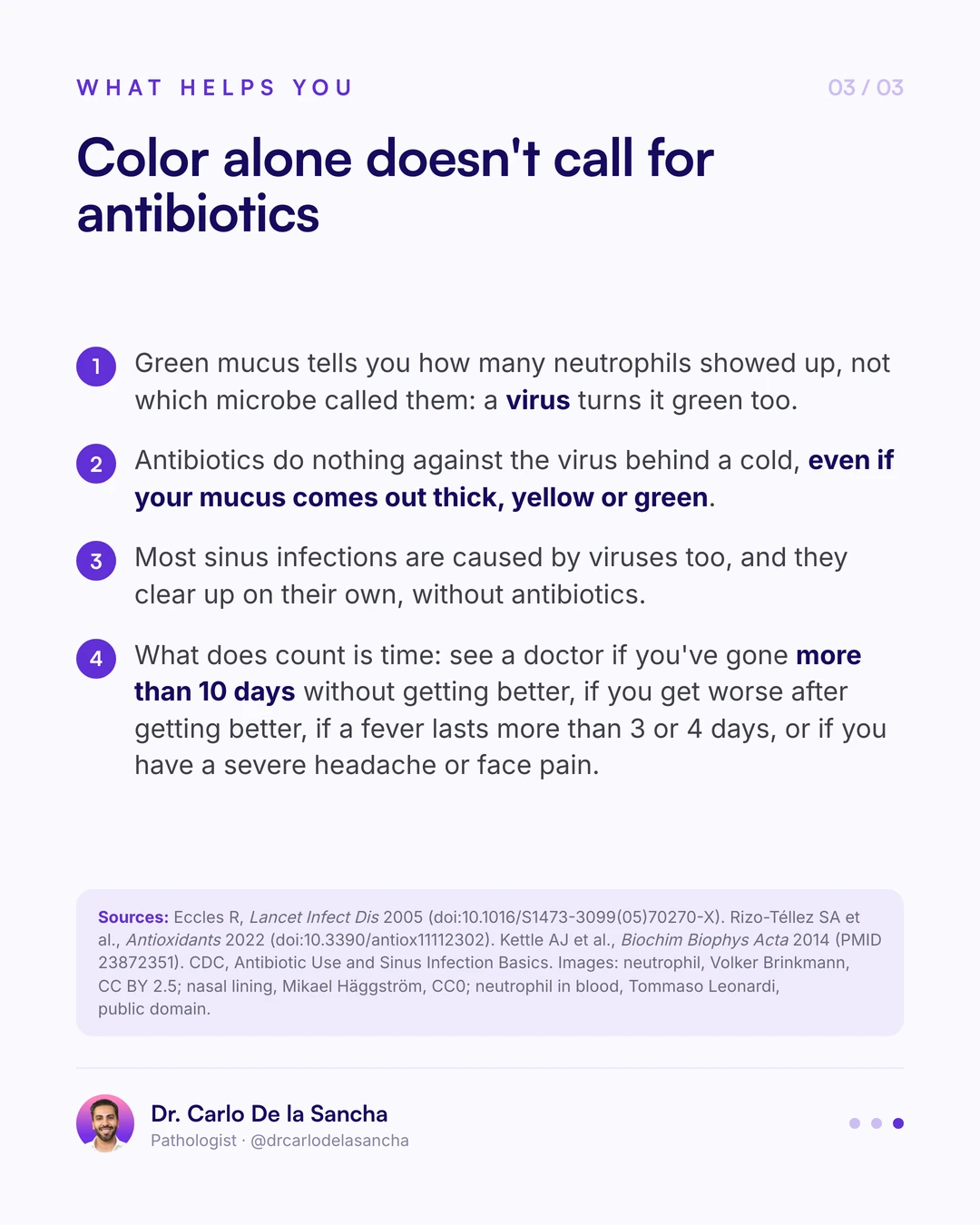
  • What helps you 03 / 03 Color alone doesn't call for antibiotics Green mucus tells you how many neutrophils showed up, not which microbe called them: a virus turns it green too. Antibiotics do nothing against the virus behind a cold, even if your mucus comes out thick, yellow or green. Most sinus infections are caused by viruses too, and they clear up on their own, without antibiotics. What does count is time: see a doctor if you've gone more than 10 days without getting better, if you get worse after getting better, if a fever lasts more than 3 or 4 days, or if you have a severe headache or face pain. Sources: Eccles R, Lancet Infect Dis 2005 (doi:10.1016/S1473-3099(05)70270-X). Rizo-Téllez SA et al., Antioxidants 2022 (doi:10.3390/antiox11112302). Kettle AJ et al., Biochim Biophys Acta 2014 (PMID 23872351). CDC, Antibiotic Use and Sinus Infection Basics. Images: neutrophil, Volker Brinkmann, CC BY 2.5; nasal lining, Mikael Häggström, CC0; neutrophil in blood, Tommaso Leonardi, public domain. Dr. Carlo De la Sancha Pathologist · @drcarlodelasancha
  • Want to understand your body? Subscribe to my newsletter: drcarlodelasancha.com/en/newsletter Save it, share it and follow me → @drcarlodelasancha Educational content. Not a substitute for a visit to your doctor.

Know someone who would find this helpful?

Share it with them.