
YOUR BODY · SLIDE BY SLIDE

It looks like molluscum, but it's cells swallowing others alive

A rare disease that sometimes shows up only in the skin, and the clue the biopsy gives.

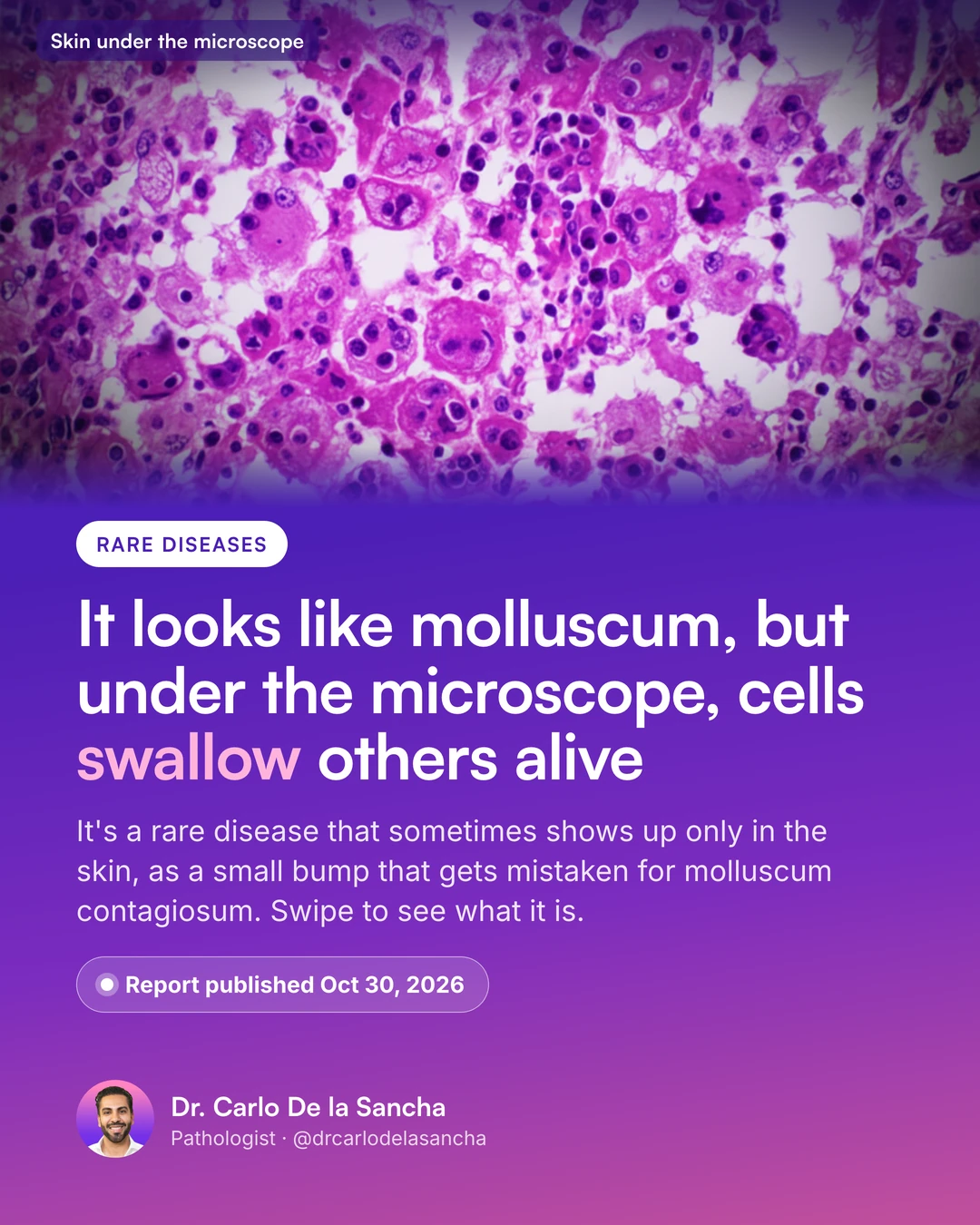
  • Skin under the microscope Rare diseases It looks like molluscum, but under the microscope, cells swallow others alive It's a rare disease that sometimes shows up only in the skin, as a small bump that gets mistaken for molluscum contagiosum. Swipe to see what it is. Report published Oct 30, 2026 Dr. Carlo De la Sancha Pathologist · @drcarlodelasancha
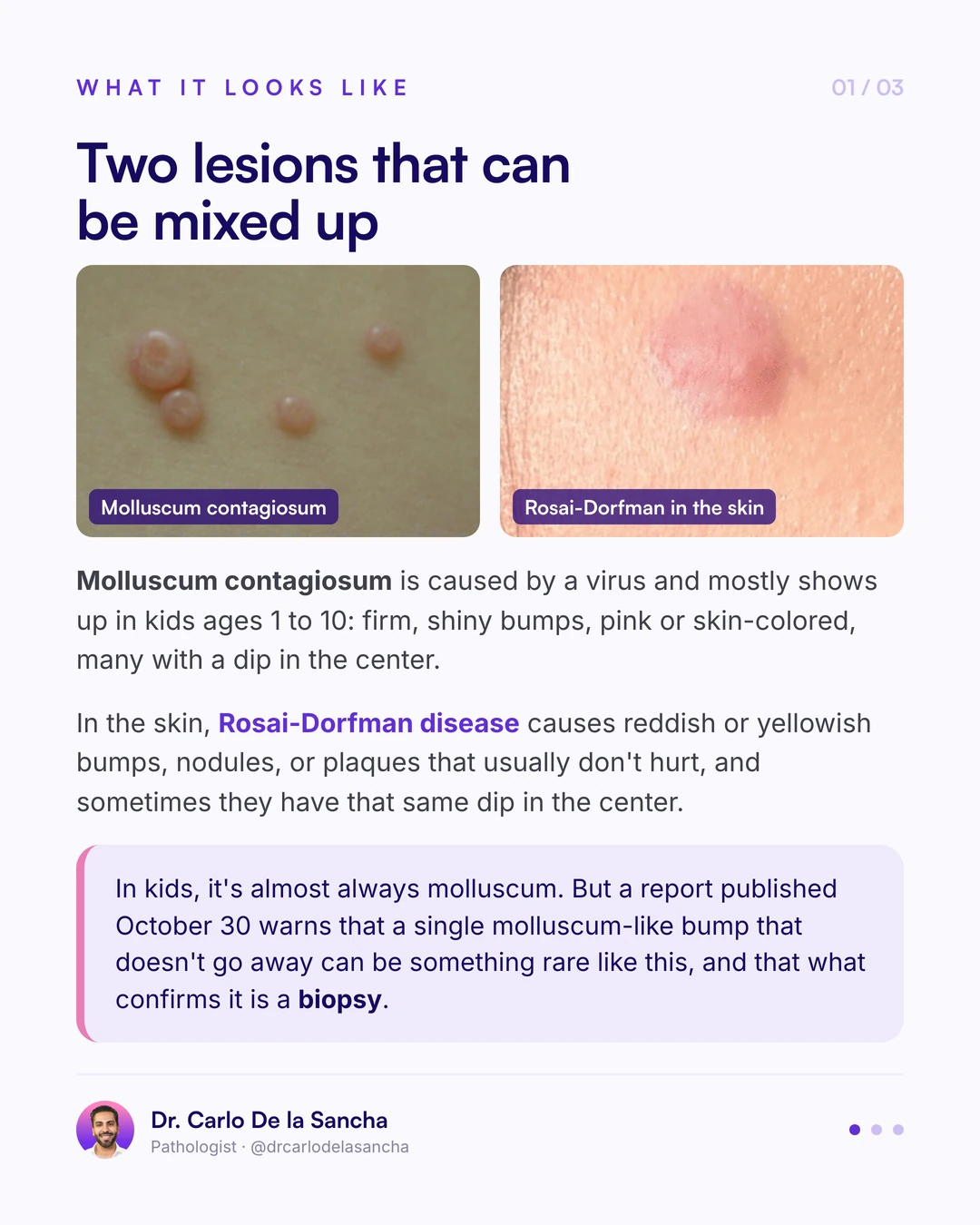
  • What it looks like 01 / 03 Two lesions that can be mixed up Molluscum contagiosum Rosai-Dorfman in the skin Molluscum contagiosum is caused by a virus and mostly shows up in kids ages 1 to 10: firm, shiny bumps, pink or skin-colored, many with a dip in the center. In the skin, Rosai-Dorfman disease causes reddish or yellowish bumps, nodules, or plaques that usually don't hurt, and sometimes they have that same dip in the center. In kids, it's almost always molluscum. But a report published October 30 warns that a single molluscum-like bump that doesn't go away can be something rare like this, and that what confirms it is a biopsy. Dr. Carlo De la Sancha Pathologist · @drcarlodelasancha
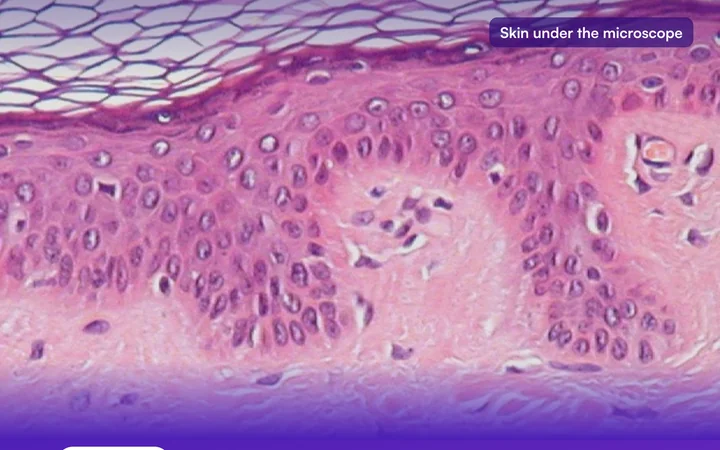
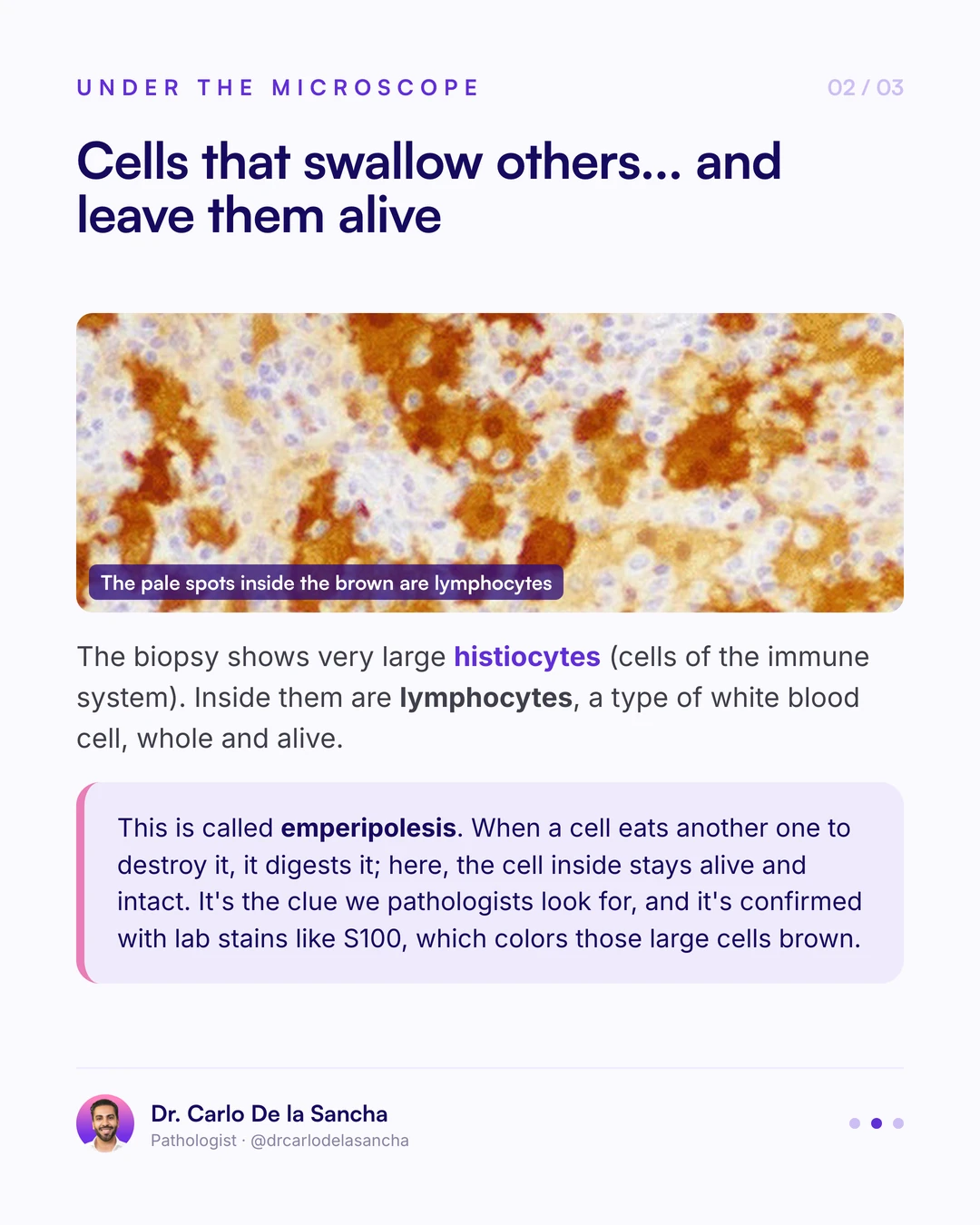
  • Under the microscope 02 / 03 Cells that swallow others... and leave them alive The pale spots inside the brown are lymphocytes The biopsy shows very large histiocytes (cells of the immune system). Inside them are lymphocytes, a type of white blood cell, whole and alive. This is called emperipolesis. When a cell eats another one to destroy it, it digests it; here, the cell inside stays alive and intact. It's the clue we pathologists look for, and it's confirmed with lab stains like S100, which colors those large cells brown. Dr. Carlo De la Sancha Pathologist · @drcarlodelasancha
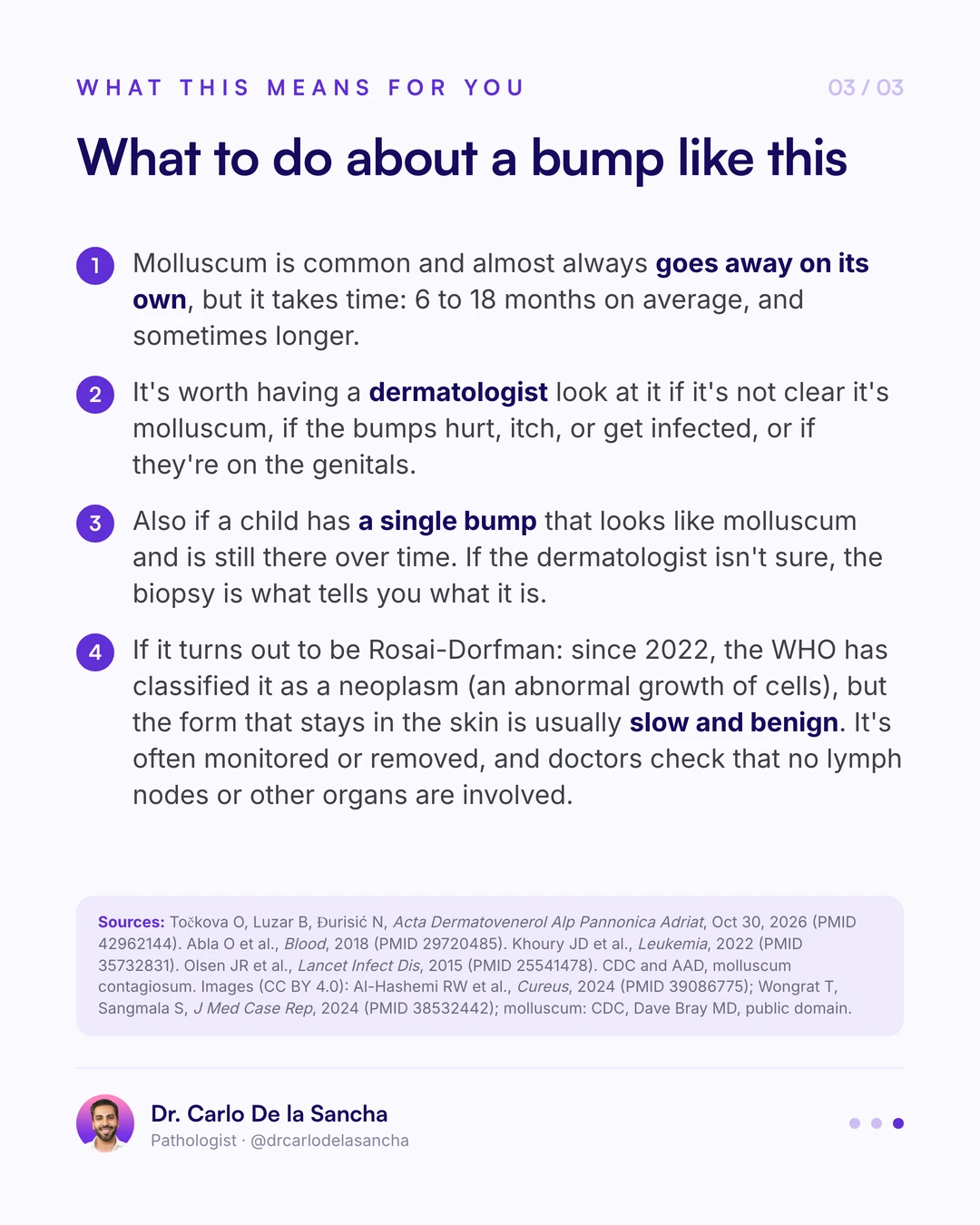
  • What this means for you 03 / 03 What to do about a bump like this Molluscum is common and almost always goes away on its own, but it takes time: 6 to 18 months on average, and sometimes longer. It's worth having a dermatologist look at it if it's not clear it's molluscum, if the bumps hurt, itch, or get infected, or if they're on the genitals. Also if a child has a single bump that looks like molluscum and is still there over time. If the dermatologist isn't sure, the biopsy is what tells you what it is. If it turns out to be Rosai-Dorfman: since 2022, the WHO has classified it as a neoplasm (an abnormal growth of cells), but the form that stays in the skin is usually slow and benign. It's often monitored or removed, and doctors check that no lymph nodes or other organs are involved. Sources: Točkova O, Luzar B, Đurisić N, Acta Dermatovenerol Alp Pannonica Adriat, Oct 30, 2026 (PMID 42962144). Abla O et al., Blood, 2018 (PMID 29720485). Khoury JD et al., Leukemia, 2022 (PMID 35732831). Olsen JR et al., Lancet Infect Dis, 2015 (PMID 25541478). CDC and AAD, molluscum contagiosum. Images (CC BY 4.0): Al-Hashemi RW et al., Cureus, 2024 (PMID 39086775); Wongrat T, Sangmala S, J Med Case Rep, 2024 (PMID 38532442); molluscum: CDC, Dave Bray MD, public domain. Dr. Carlo De la Sancha Pathologist · @drcarlodelasancha
  • Want to understand your body? Subscribe to my newsletter: drcarlodelasancha.com/en/newsletter Save it, share it and follow me → @drcarlodelasancha Educational content. Not a substitute for a visit to your doctor.

Know someone who would find this helpful?

Share it with them.